What Is Precision Agriculture, and Can Small Farmers in the Philippines Use It?
Precision agriculture means giving each field, or each part of a field, what it really needs, based on measurements instead of one rate for everything. Small farmers in the Philippines can use it now: a leaf color chart, the MOET App, a mapped field, free satellite pictures and good records are all precision tools, and none needs a drone. The farm app anee.io, built for Filipino farmers, brings several together, from mapping each lot to dating every task by that lot's own day count.
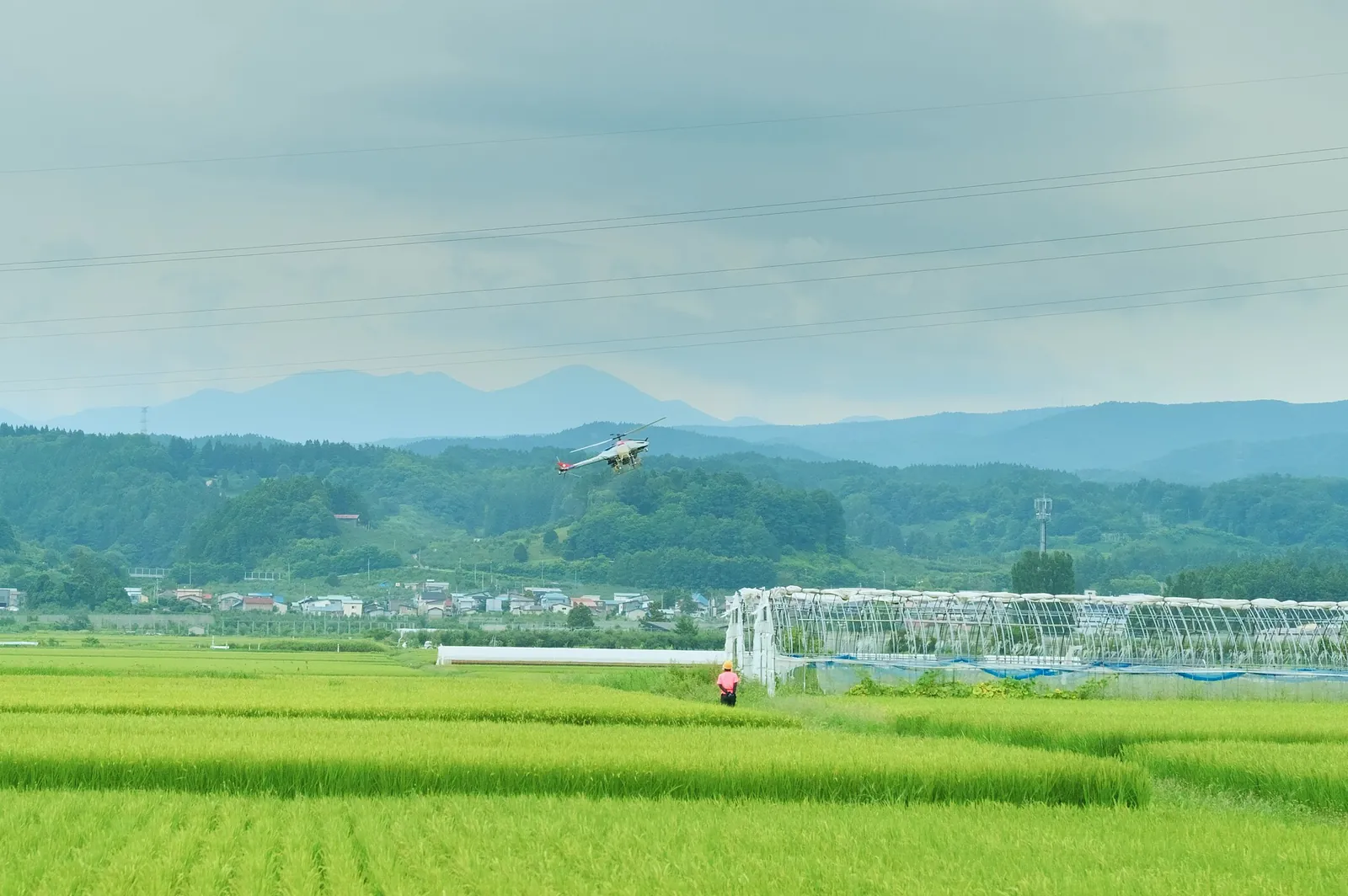
The International Society of Precision Agriculture calls it a management strategy that gathers and analyzes data across space and time, and over single plants. It then combines that data with other information to support decisions by the variation it finds. The goals are better use of inputs, better yields and quality, more profit and more sustainable farming.
In plain words: measure first, then give each field or each part of it what it needs. Big farms abroad do this with GPS tractors and yield monitors. A Filipino farmer with two hectares can do it with a plastic color chart, a phone and a notebook.
Key points
- Precision agriculture is an idea, not a machine: measure, then match the inputs to the need.
- For rice, there are already precision tools: the leaf color chart, the MOET App and the Rice Crop Manager Advisory Service.
- Timing each lot by its own day count is precision too, because lots planted a week apart need their fertilizer a week apart.
- Satellites and drones add a view from above, but they are optional on small farms.
- Records close the loop, because they show which change paid off.
Precision agriculture: Philippines examples you can use now
Four tools help set the right amount of nitrogen, phosphorus and potassium for rice. These are the leaf color chart or its app, the MOET kit and app, the Nutrient Omission Plot Technique and the Rice Crop Manager Advisory Service. Each one measures your field instead of trusting a general rate.
| Tool | What it measures | Cost | Where it comes from |
|---|---|---|---|
| Leaf color chart or LCC App | When rice needs nitrogen, from leaf color | Low | A plastic chart or a phone app |
| MOET kit and MOET App | Which nutrients your soil lacks, from a pot test | Low | A pot test kit and a phone app |
| Rice Crop Manager Advisory Service | A nutrient and crop guide for one field | Free at launch | A web service |
| Soil test | Soil nutrients and pH | Varies | A soils laboratory |
| Mapped field area | The true size of each field | Free to low | GPS map apps |
| Satellite pictures | Greenness and weak zones | Free data | Copernicus Sentinel satellites |
| Drones | Spraying or mapping from the air | High | Hired service providers |
The leaf color chart shows how simple precision can be. Read it every 7 days from 14 DAT or 21 DAS until early flowering. Apply nitrogen only when 6 or more of 10 leaves read below 4 in transplanted rice. So the nitrogen follows the crop, not the calendar. Our guide on nutrient deficiency in rice shows what a hungry crop looks like.
How can a small farm start with precision agriculture?
Measure each field's true area
Trace it on a map. Every bag per hectare depends on that number.
Find what the soil lacks
Use the MOET App, a soil test or the Rice Crop Manager before you buy fertilizer.
Split the farm into real lots
A sandy strip, a low spot that floods and a well drained field behave differently, so give each its own lot and plan.
Time inputs by each lot's stage
Date every fertilizer and spray from that lot's own day zero, and read the leaf color chart on schedule.
Record what went in and what came out
Write the inputs, the costs and the harvest for each lot.
Compare and adjust
Hold this season against the last one, lot by lot, then change the next plan.
Many fields called one hectare by habit are smaller or larger. If a field you call one hectare measures 0.8 on the map, a one hectare plan puts a quarter more fertilizer per hectare than you meant. A traced map fixes that before you spend a peso.
Do you need drones and sensors?
No. They help on large farms, but small farms get most of the gain from the steps above. Our guide to farm sensors in the Philippines covers them for when you are ready. If you hire a spraying drone, check the product first. The Fertilizer and Pesticide Authority keeps a separate list of pesticide products registered for drone use, apart from its main list. Follow the label and the FPA registration.
Satellites are cheaper than drones, because the Sentinel data are free. They show weak zones across a field about every five days when clouds allow. There is also PRISM, a satellite based system that maps rice areas, planting dates and flood or drought damage for planning. Our guide to satellite images of my farm explains what a picture can and cannot show.
How does anee.io fit precision agriculture?
anee.io covers the measuring, the timing and the record. Farm maps give the area and the length of each side of a field you trace over a satellite view. Each lot keeps its own day zero, so the Protocol Builder and the cropping calendar date every fertilizer task for that lot.
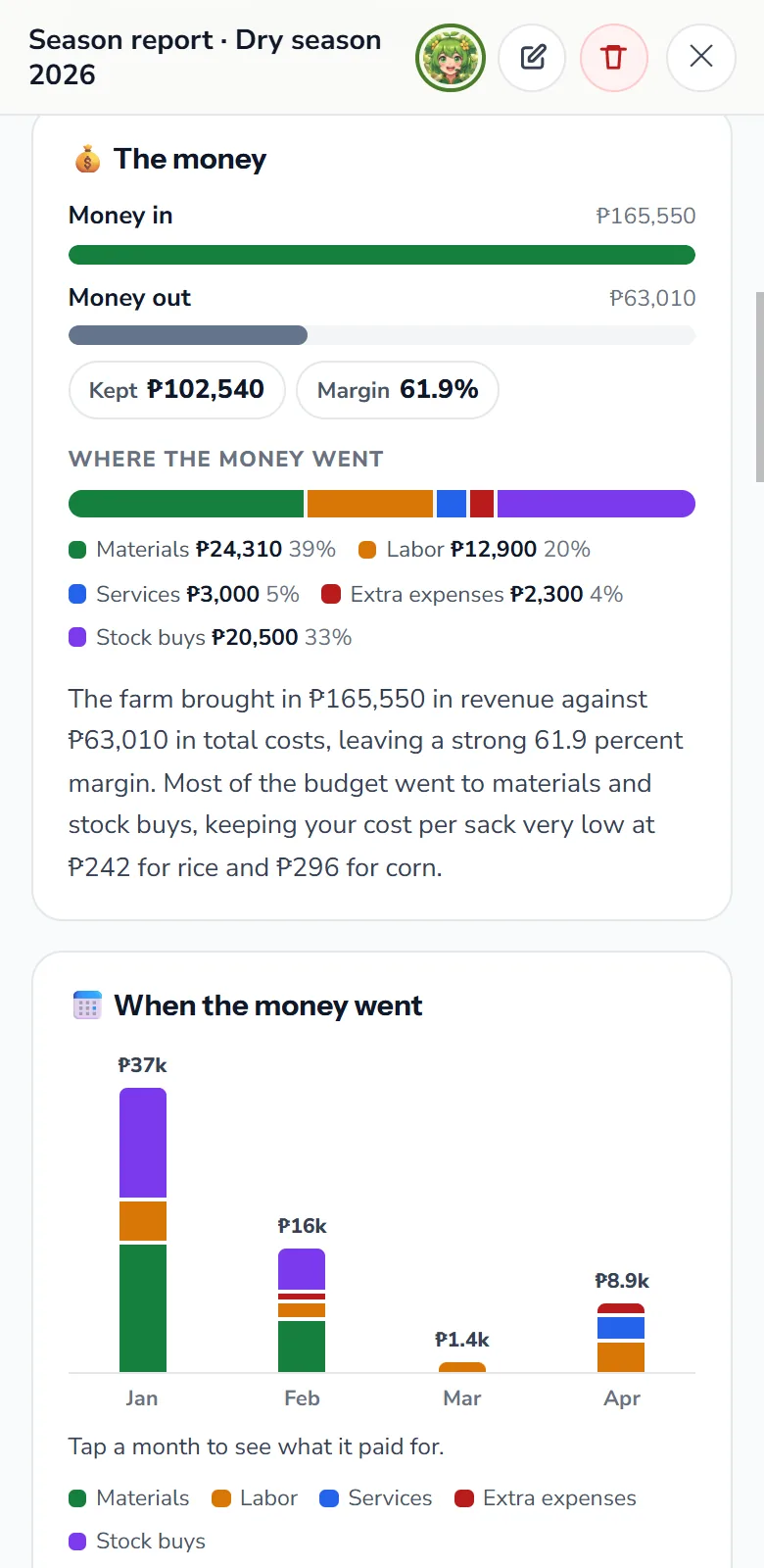
The NPK Plus Calculator adds up every nutrient in the fertilizers you plan to use. It checks the total against what your crop needs and shows the yield it can feed. Satellite Analysis reads Sentinel pictures of a field you draw, and Anee, the smart farm technician, points to the weak spots. At the end, the reports show what each season cost and earned, and Compare Reports puts two seasons side by side.
Be clear about the limits, though. The app has no drone or field sensor of its own, so it works from your records, your maps and satellite pictures. Anee's analyses need internet and use credits.
Tap the fertilizers you plan to use, and NPK Plus adds up every nutrient per hectare. It comes with Libre plus Anee and every plan above it.
Try NPK PlusWhat does it cost?
The Libre plan is free and covers one active season with a few ads. The NPK Plus Calculator needs a plan with Anee, from PHP 70 a month, and so do Satellite Analysis and Anee's readings, which run on credits. Solo Farmer, at PHP 200 a month, adds all reports, workers and inventory. See the pricing page for every plan, and our guide to digital farming tools for the wider picture.