How to Stop Pests Before They Destroy Your Harvest: Early Pest Detection
Early pest detection means walking your field on a fixed routine and counting pests and their natural enemies. You act only when a count crosses an action level, long before the damage shows from the road. Check fields early every morning, and hold insecticide in the first 30 days after transplanting. With anee.io, a farm app built for Filipino farmers, the routine lives on your board, and Anee, its smart farm technician, reads the photos you take.
Damage you can see from the road is late damage. Brown planthoppers cause hopperburn near maturity at about 400 to 500 nymphs per plant. At 1 planthopper per stem or fewer, there is still time to act. The gap between those two numbers is your window.
The risk is current. Records from 2021 to 2025, shared in January 2026, show the top threats to rice in the first quarter. They were brown planthoppers, stem borers, rodents, bacterial leaf blight and leaffolders. Central Luzon was the most exposed, with Bicol and Eastern Visayas also at high risk.
- Walk each lot on a schedule: daily in the seedbed, weekly in the field, the usual rhythm for planthoppers.
- Go out from 5 to 7 at dawn or again toward evening, when insects are easiest to count.
- Count pests and their natural enemies, then compare with the action levels below.
- Hold insecticide in the first 30 days after transplanting or 40 days after sowing.
- Put the walks on your calendar, so they happen even in busy weeks.
What does early pest detection look like in a rice field?
Set the rhythm
Check the seedbed every day and each field once a week, more often in risky stages. This rhythm works for planthoppers.
Walk a diagonal
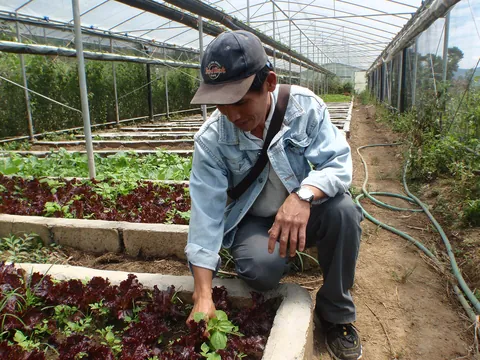
Cross the field corner to corner and stop at 10 to 20 hills. Do not judge the field from the bund alone.
Look low and tap
Bend each hill a little and tap it near the base. Count the planthoppers that fall on the water, and check the leaves for egg masses.
Count the friends too
Note spiders, water striders and mirid bugs. When natural enemies outnumber the planthoppers, the risk of hopperburn is low.
Use a light at night
A lamp set against a pale wall or above a basin of water tells you when planthoppers start flying in. Keep it away from the seedbed and the field.
Write it down
Note the date, the lot, the stage and the counts, with a photo. A count that rises over two walks matters more than one high number.
When is a count high enough to act?
The pest levels below match real yield loss for a 120 day variety. Use them as your action levels. Then read the full table for your own variety and stage.
| Growth stage | Stem borer | Brown or whitebacked planthopper | Rice bug |
|---|---|---|---|
| Seedbed | 5 or more egg masses per square meter | Negligible | Negligible |
| Early tillering | 30 percent or more deadhearts | 25 or more insects per hill | Negligible |
| Mid tillering to early panicle initiation | 1 or more egg mass per square meter | 50 or more insects per hill | Negligible |
| Flowering | 20 percent or more whiteheads | 50 or more insects per hill | Negligible |
| Milk | 20 percent or more whiteheads | More than 100 insects per hill | More than 5 per square meter |
| Grain filling | More than 20 percent whiteheads | More than 100 insects per hill | More than 10 per square meter |
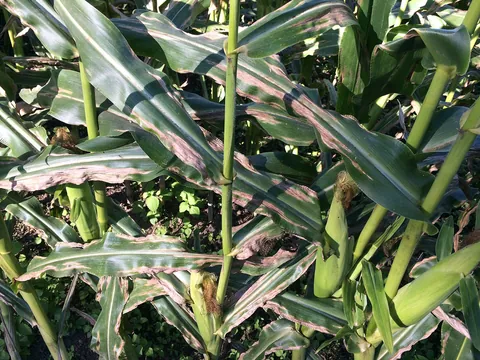
For mais, watch for fall armyworm
Fall armyworm is a newer threat to corn here. The report filed with the International Plant Protection Convention dates the first suspected case to June 20, 2019, in Piat, Cagayan. The national action plan uses pheromone lures and traps for monitoring, plus scouting to confirm what the traps catch. Our fall armyworm guide shows the signs on corn.
Skip sprays for leaf feeders within 30 days after transplanting or 40 days after sowing. Young rice recovers by making new leaves and tillers, while early sprays kill the natural enemies that keep pests down.
How anee.io keeps early pest detection on schedule
A routine fails in the busy weeks, so put it on the calendar. In anee.io, add a scouting task to your Protocol Builder on the days after transplanting that matter, and it lands on each lot's own dates. The growth stages view shows each lot's stage, with what to do now and what to watch for. Then the 6 AM morning plan email tells your team which lot to walk today.
In the field, Quick Capture saves a photo and Quick Voice saves what you say, both kept with the season. Your notes keep working with no signal and sync later. On a plan with Anee, send her a photo of what you found, and she reads it with your lot's stage and weather. Satellite Analysis can also show the weak spots in a field, so you know where to walk first. Anee and Satellite Analysis use credits.
Sign up free, add your lots, and give every lot a weekly scouting task dated from its own day zero.
Start free