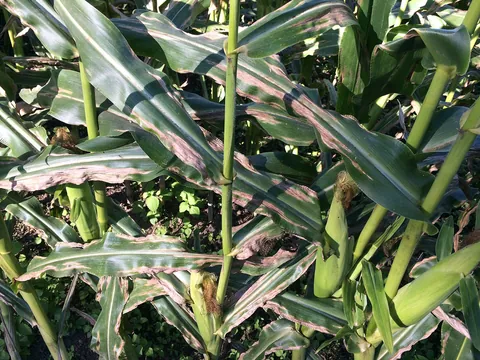
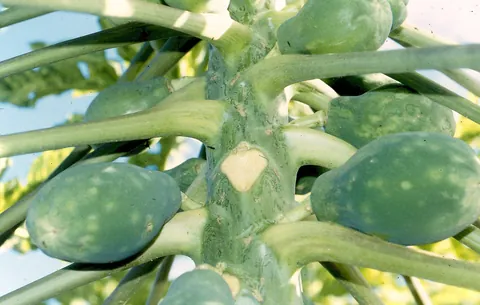
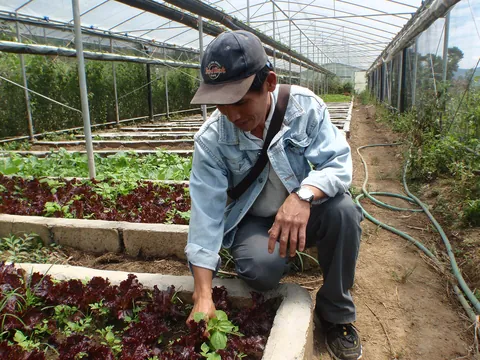
How Do I Identify Rice Pests From a Photo?
To identify rice pests from a photo, take two pictures: a close one of the insect and one of the damage it left, both sharp and in daylight. Then match the damage to the pest: deadhearts and whiteheads point to stem borers, yellow and dried patches with insects at the base point to planthoppers, and empty grains point to rice bugs. With anee.io, a farm app built for Filipino farmers, you can send the photo to Anee, its smart farm technician, or match the damage in its Pest Finder.
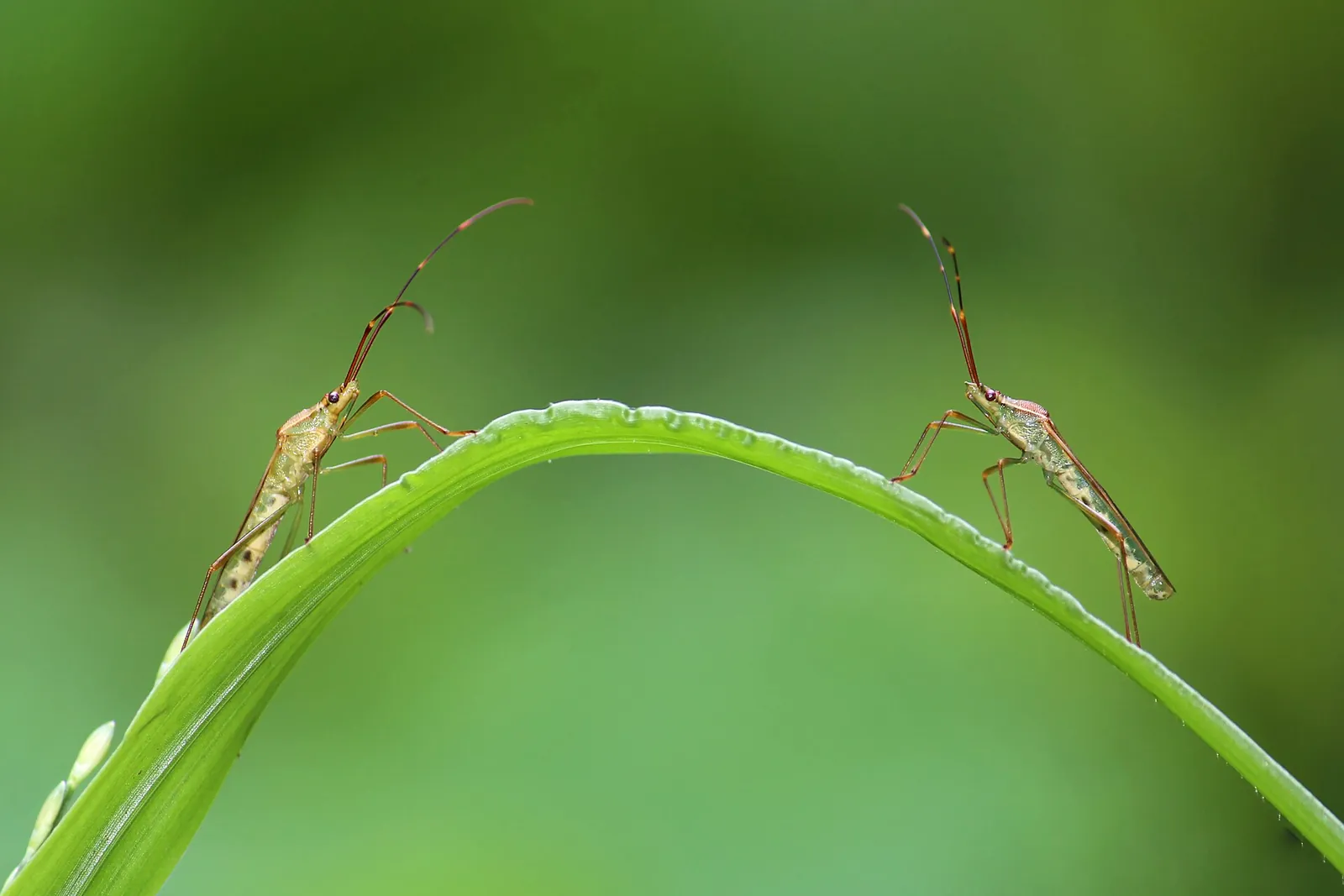
Often, a photo of the damage helps more than a photo of the insect. Many rice pests hide at the base of the plant or fly off before you get close, but the damage stays. Also, many insects in a paddy are not pests at all. Spiders, dragonflies and many small wasps eat the pests, and a photo full of them is good news.
Different causes can also leave the same mark. Deadhearts and whiteheads, for example, can come from stem borers, rats, neck blast or black bugs. So a good photo set shows three things: the insect, the damage and the pattern in the field.
- Take three photos: the insect up close, the damage, and the hill or patch around it.
- Take the photos at dawn or toward evening, the hours when insects are usually counted.
- Match the damage, not just the bug, with the table below.
- Confirm with a field check, like pulling a tiller or tapping the base of the hill, before you spray.
- In anee.io, send the photo to Anee or match the damage in the Pest Finder.
What photos should you take?
Go early or late
Walk the field from 5 to 7 at dawn, or again toward evening. These are the hours for monitoring insect pests, since many move or hide later in the day.
Shoot the insect
Fill the frame with it, in sharp focus, from the side and from above. Put a coin or your finger beside it to show its size.
Shoot the damage
Take the leaf, the stem base or the panicle where the harm is. For a dead center tiller, pull it and photograph its base too.
Shoot the pattern
Step back and take the hill, then the patch or the whole field. Patches, rows and field edges each tell a different story.
Tap the base
Grasp a hill, bend it over a little and tap it near the base to check for planthoppers. Then photograph what falls on the water.
Write it down
Note the lot, the variety and the days after transplanting, because many pests strike at certain stages.
Which rice pest left this damage?
Match what your photo shows with the first column. Then do the check in the last column before you decide anything.
| What the photo shows | Likely pest | How to be sure |
|---|---|---|
| The center tiller dries and pulls out easily (deadheart) | Stem borer | Split the stem and look for the larva |
| White, empty panicles at heading (whitehead) | Stem borer, though rats, neck blast and black bugs do the same | Pull the panicle and split the stem |
| Plants yellow, then brown and dry in patches, with sooty mold at the base | Brown planthopper (hopperburn) | Tap the base and count the hoppers that fall |
| Plants turn reddish brown or yellow and wilt, with no honeydew or sooty mold | Rice black bug (bugburn) | Try to pull the plant: with black bug damage it will not come out |
| Leaves folded lengthwise with pale streaks inside | Rice leaffolder | Open a fold and look for the caterpillar |
| Empty or spotted grains from flowering to dough stage | Rice bug | Count the bugs on 20 hills in the early morning |
| Young hills missing or cut at the waterline | Golden apple snail | Look for snails in the water and pink egg clusters on stems |
Look alikes that fool a photo
Hopperburn and the bugburn of black bugs look alike from the bund. The check is simple: planthoppers leave honeydew and sooty mold at the base, while black bug damage has none. Also, you cannot pull out a plant hit by black bugs, but a stem borer deadheart comes out easily.
Rice bug damage can look like a nutrient problem or flower thrips, so look for the bugs themselves. Not sure it is an insect at all? Read how to tell a pest from a disease, and see our guide to the golden apple snail for snail damage.
When does a photo mean you should act?
One insect in a photo is not a reason to spray. At 1 brown planthopper per stem or fewer, there is still time to act if the numbers rise. For rice bugs, you may need direct control above 10 bugs per 20 hills. Each growth stage also has its own levels, so count before you decide. Our guide to early pest detection has the full table.
Planthopper outbreaks follow pesticides that destroy their natural enemies. If you do spray, use a product registered with the FPA for rice and for that pest, and follow the label.
How anee.io helps you identify rice pests from a photo
Pick palay in the Pest Finder in anee.io, then where you see the damage: the leaves, the stems, the panicles or the roots. It names the pests that fit, how to be sure, and the active ingredients with their groups, never brands. On a plan with Anee, you can send the photo to Anee, the smart farm technician inside anee.io. She reads it with your lot, its day count, the weather and what you already applied. Then she tells you what it most likely is and what to check next.
Quick Capture saves each photo as a note on the season, with tags such as Pest or Lot 2. Next season you can look back at when the pest came. Anee needs internet and uses credits, while your notes and photos also work on the free Libre plan.
Pick your crop and where you see the damage, and get the pests that fit, how to be sure and what controls them.
Open the Pest Finder