

Fruits and Plantation Crops
Not sure it is this pest? Use the Pest Finder in anee.io ›
Spiraling whitefly
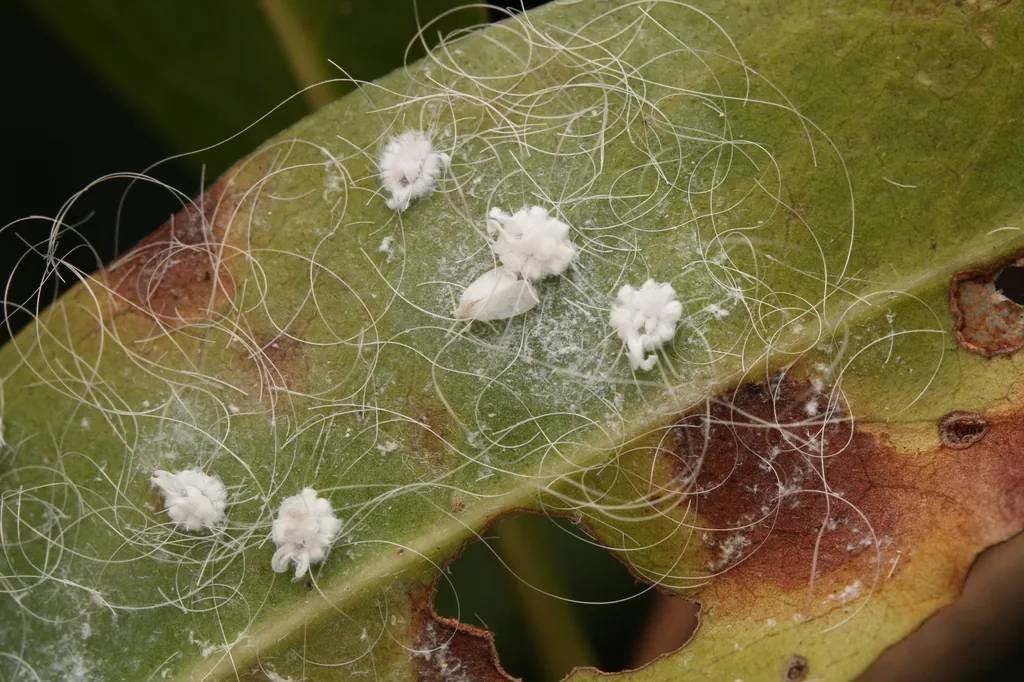
White waxy spirals of eggs and fluffy white nymphs cover the underside of leaves, with sticky honeydew and black sooty mold on top.
Crops it attacks
Where the damage shows
On the leaves
When to act
In the dry season, check the undersides of 10 leaves on 10 plants each week. Before any action, look for black, parasitized nymphs: if many are black, the wasps are winning. Wash or prune when spirals and fluffy nymphs cover many leaves and sooty mold spreads.
How to prevent it
- Wash colonies off the leaf undersides with a strong water jet each week in the dry season.
- Prune and bag heavily infested leaves and twigs, and do not move infested plants or cuttings.
- Water and mulch trees in the dry season. Outbreaks build on dusty, water stressed plants.
- Keep ants down. They guard the nymphs from wasps and lady beetles.
- Avoid broad sprays such as pyrethroids and organophosphates. They wipe out the wasps and outbreaks come back worse.
Natural enemies and biological help
- Tiny Encarsia wasps and the small lady beetle Nephaspis keep spiraling whitefly low where they are established.
- Lacewing larvae and spiders also feed on the nymphs. Most outbreaks fade once the enemies catch up.
Where this comes from
Not sure it is this one?
Many pests look alike. Send a photo to Anee, the smart farm technician in anee.io. She reads it with your crop, its age and the weather, and tells you what it most likely is and what to do first. In Tagalog or English.