Rice Caseworm: Cut Leaves, Floating Cases and What to Do
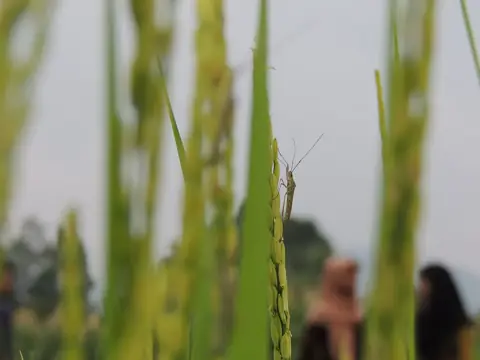
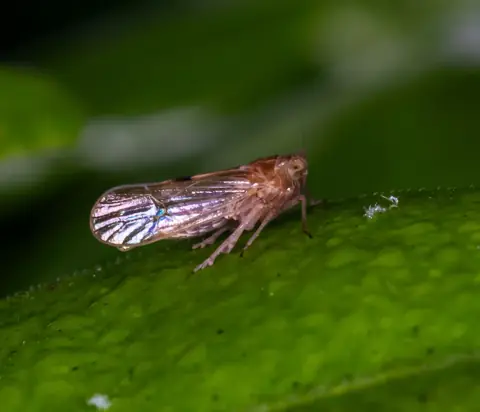
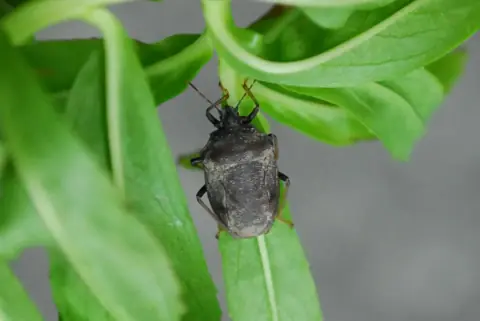
The rice caseworm is a caterpillar that lives in a tube made from cut rice leaves, and floats on the water of the paddy. Its damage looks as if scissors cut the leaf tips. This page shows how to spot it and why draining the field comes first.
What Is Rice Caseworm?
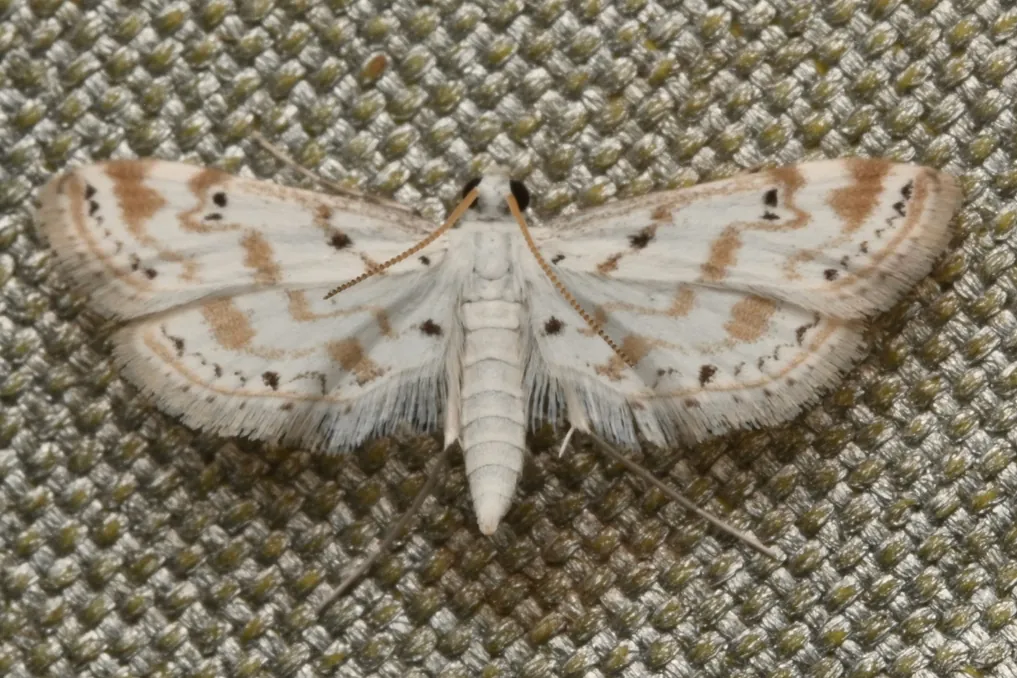
The rice caseworm is the larva of a moth, and it lives wherever rice stands in water, in wetland and irrigated fields alike. The larva cuts off leaf tips to make a case. It hides in the case and floats on the water surface during the day, and feeds on the leaves. The adult moths are nocturnal and come to lights.
It is mostly a problem in ill drained fields. The damage looks bad, but its pattern is easy to recognize once you have seen the cases.
| Fact | Details |
|---|---|
| Name | Rice caseworm |
| Scientific name | Parapoynx stagnalis (also Nymphula depunctalis) |
| Kind | Insect |
| Crops it attacks | Rice |
| Local names | None recorded |
| Where it strikes | Leaves and seedlings |
| When it strikes | In the seedbed and the young crop, in fields with standing water. |
| Life cycle | Moths are active at night and come to light. The larvae live in cases made of leaf tips, float on the water by day and feed on the leaves. |
How to Identify Rice Caseworm
Look at the water between the hills. Small tubes of rolled leaf that float or cling to the leaves are the cases. Leaf tips snipped off straight across, as if with scissors, are a sure sign. Feeding leaves a papery upper skin and a ladder like pattern of hard fibers. The rice leaffolder also rolls leaves, but it stays on the leaf and does not float.
- Leaf tips are cut at right angles, as if with scissors.
- Small leaf cases float on the water or cling to the plants.
- Fed on leaves have a papery upper skin.
- Skeletonized leaf tissue shows a ladder like pattern.
- Moths appear at lights at night.
Cut leaf tips can also come from the rice leaffolder or from wind. Only the caseworm leaves floating cases on the water.
How Rice Caseworm Hurts Your Palay
The caseworm removes leaf area, so heavy attacks slow the young plant. The sources we read give no yield loss figure and no action threshold, so we do not state any. Look at how much leaf area is gone before you decide on any action.
How to Control Rice Caseworm
- Drain the field. This comes first among the cultural answers, and the pest is most likely in ill drained fields.
- Plant early and use wider spacing. Sparse planting also reduces the damage.
- Transplant older seedlings.
- Apply fertilizer correctly, as recommended for your variety.
- Encourage the natural enemies. Snails feed on the eggs, water beetles feed on the larvae, and spiders, dragonflies and birds feed on the adults. Our guide on rice insects lists more.
When a Spray Makes Sense
Foliar sprays of carbamate insecticides work. Avoid pyrethroids, because the pest has become tolerant to them. Draining the field usually does the job first. The sources we read name no single carbamate for the Philippines, so ask a technician which registered product to use. Do not spray early in the crop without a true outbreak.
Active Ingredients on Philippine Labels
| Active ingredient | IRAC group | On Philippine labels |
|---|---|---|
| Tebufenozide | IRAC 18 | A first choice. 1 registered product names it on rice. |
| Malathion | IRAC 1B | A sound second choice. 40 registered products name it on rice. |
| Carbaryl | IRAC 1A | A sound second choice. 27 registered products name it on rice. |
| Isoprocarb (MIPC) | IRAC 1A | A sound second choice. 1 registered product names it on rice. |
| Methomyl | IRAC 1A | Older or broad chemistry: a last resort. 58 registered products name it on rice. |
| Fenobucarb (BPMC) plus chlorpyrifos | IRAC 1A plus 1B | Older or broad chemistry: a last resort. 30 registered products name it on rice. |
| Carbofuran | IRAC 1A | Older or broad chemistry: a last resort. 21 registered products name it on rice. |
| Chlorpyrifos | IRAC 1B | Older or broad chemistry: a last resort. 18 registered products name it on rice. |
| Fenitrothion | IRAC 1B | Older or broad chemistry: a last resort. 4 registered products name it on rice. |
These are on Philippine labels for it, but we leave them off the list above, for the reasons below.
- Deltamethrin: Caseworm has grown tolerant of pyrethroids, and deltamethrin is known to set off planthopper outbreaks.
Resistance. Caseworm has grown tolerant of pyrethroids (IRAC 3A). If a spray is truly needed after draining, use a carbamate (1A) or tebufenozide (18).
Use only products registered with the Fertilizer and Pesticide Authority, and follow the label for the rate, the timing and the protective clothing. Switch to a different insecticide group next time, so the pest does not learn to survive it. Our guide to integrated pest management explains how.
Keep It Out Next Season
- Drain the field for a few days when you see floating cases. Caseworms cannot move between hills without water.
- Fix drainage so water does not stand long in low spots, where caseworm is worst.
- Plant early, use wider spacing and transplant older seedlings, which suffer less.
- Keep the bunds and canals free of weeds, and plant together with the farms around you.
- Apply fertilizer at the rate your variety needs, not more.
Natural Enemies and Biological Help
- Water snails eat the eggs, water beetles eat the larvae, and spiders, dragonflies and birds catch the moths.
- Ducks in the paddy pick up the floating cases.
Not Sure What You Are Seeing?
Take a clear photo of the insect, the damage and the whole plant, then ask Anee, the smart farm technician in anee.io, in Tagalog or English. Anee tells you what it most likely is and what to do at the age of your crop. You can also put your scouting days on the cropping calendar, so the team knows when to walk the field.
anee.io keeps your scouting, spraying and harvest on one calendar, and Anee answers when something looks wrong.
- Scouting days dated from each lot's own planting day
- Photos and notes for every lot
- Anee, the smart farm technician, in Tagalog or English
Questions Farmers Ask About Rice Caseworm
Why are there cut leaves floating on my paddy?
Does draining really help?
Can I use any insecticide?
Stop Rice Caseworm from costing you the harvest
With Libre + Anee, read the whole guide: how to be sure it is this pest, when it pays to act, and what to spray, by active ingredient.
The account is free, no credit card.