

Bagworms
Small cases made of chewed leaf bits hang under the fronds, and the leaves turn gray and ragged as if scorched.
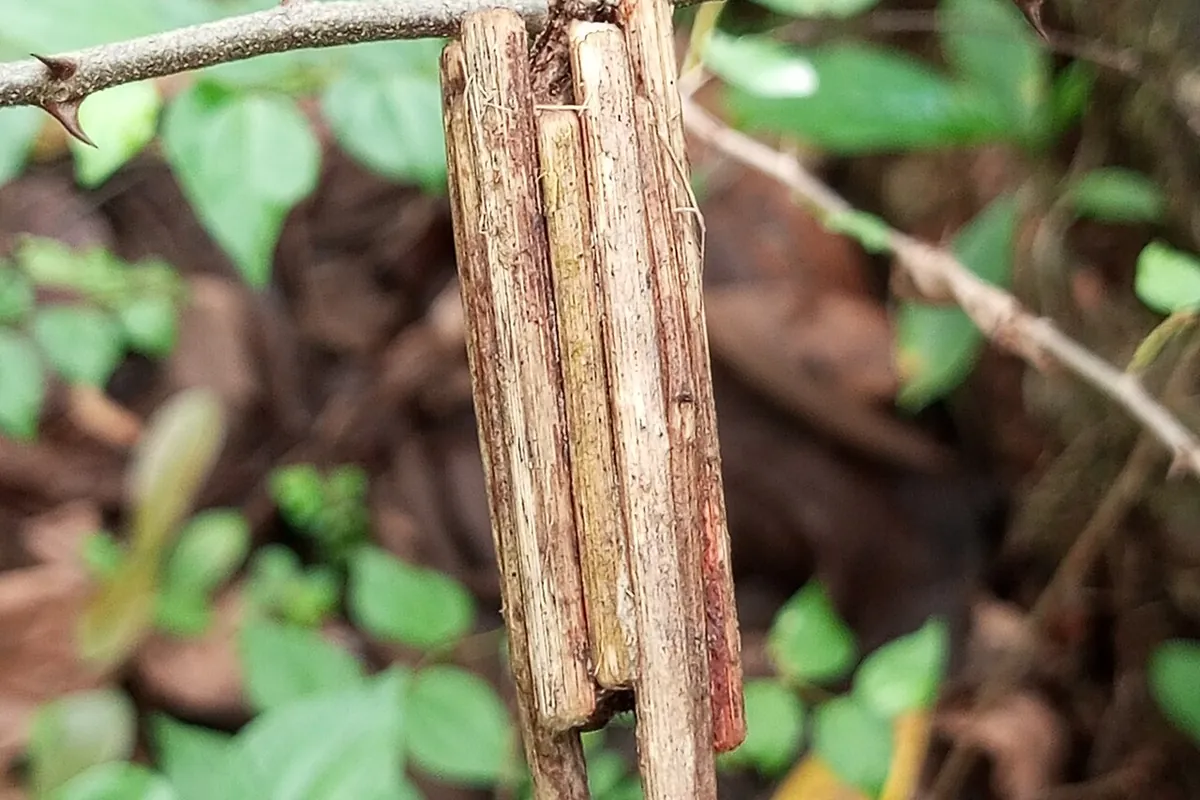
Crops it attacks
Where the damage shows
When to act
Count live larvae on one lower frond of sample palms every month. The usual oil palm action level is 10 live larvae per frond. Treat when most larvae are young, as a new generation hatches.
What to spray
Active ingredients only, never brands. The IRAC group tells how it works: switch to a different group next time, so the pest does not learn to survive it. Spray only when the damage is worth the cost, and only with products registered with the Fertilizer and Pesticide Authority for your crop. Follow the label. The Shopee and Lazada links only show who sells something with that active ingredient, not a recommendation of any seller or product.
How to prevent it
- Plant nectar plants such as Turnera, Cassia cobanensis or cadena de amor along roads and borders to feed the parasitic wasps.
- Cut and burn badly infested lower fronds early, while the outbreak is still small.
- Avoid broad spectrum sprays: they kill the parasitoids, and bigger outbreaks follow.
- Check seedlings and planting material for cases before bringing them in.
Natural enemies and biological help
- Parasitic wasps and assassin bugs are the main enemies of bagworms. Protect them.
- Bt on young larvae spares these natural enemies.
Not sure it is this one?
Many pests look alike. Send a photo to Anee, the smart farm technician in anee.io. She reads it with your crop, its age and the weather, and tells you what it most likely is and what to do first. In Tagalog or English.