How Do I Dry Palay Properly: Sun Drying or a Palay Dryer Machine?
Dry palay to 12 to 14 percent moisture within 12 to 24 hours after harvest or threshing. Sun drying on a clean pavement or net costs little in good weather. A palay dryer at a cooperative or mill, though, keeps going through rain and at night. Built for Filipino farmers, anee.io shows the rain radar before you spread your grain and keeps each lot's harvest moisture and price on record.
Fresh palay is wet, at 18 to 21 percent moisture in the dry season and 20 to 25 percent in the wet. If a palay harvester cuts your crop, wait until 90 to 95 percent of the grains are golden. Left in a pile, wet grain heats up, turns yellow and mills badly. So drying is a race against the clock, and in the wet season against the rain too.
Below are the target, sun drying done right, how a dryer differs, where to find one, and storage.
Key points
- Aim for 14 percent moisture for milling and sale, and 12 to 14 percent for storage.
- Start drying within 12 to 24 hours after harvest or threshing.
- Sun dry in thin layers of 2 to 4 cm and stir every 30 minutes.
- A palay dryer costs a fee but works in rain and at night, and PhilMech has placed many with farmer cooperatives.
- Never let dried grain get rained on again, because rewetting cracks it.
What moisture should dried palay have?
Keep grain for milling or sale at 14 percent, so its weight and milling yield hold. The NFA buys dry palay at 11 to 14 percent moisture. It widened that range from 12 to 14 percent in February 2026. Drier grain keeps longer, as the table shows.
| How long you will store it | Moisture to reach | What goes wrong above it |
|---|---|---|
| Weeks to a few months | 14 percent or less | Molds, discoloration, insect damage |
| 8 to 12 months | 13 percent or less | Insect damage |
| Your own seed for next season | 12 percent or less | Loss of germination |
Wet palay sells for less because part of what you sell is water. Our palay price guide shows how to compare wet and dry offers on the same basis.
How do I sun dry palay the right way?
Sun drying is the most common method in Asia because it costs little. Done well, it gives good grain. Done badly, it gives cracked palay grains that break in the mill.
Use a clean floor
Spread the grain on a clean concrete pavement made for drying, or on nets, mats or canvas. Sheets keep out stones and fold up fast in rain. But they can pick up moisture from wet soil underneath.
Spread it thin
Keep the layer at 2 to 4 cm. Very thin layers overheat, while thick ones stay wet at the bottom and crack when mixed.
Stir every 30 minutes
On a good drying day, nothing matters more than turning the grain. It keeps the moisture even.
Cover at midday and at the first drop
On hot days grain can pass 50 to 60 degrees C, so cover it at midday. Cover it at once if rain starts.
Check before you bag
Use a grain moisture meter if you or your buyer has one. Bag only grain that has reached your target.
Why not dry palay on the road?
A road is not a drying floor. Contamination is one of the weak points of sun drying. On a road, the grain picks up dust, stones and oil, and tires crush it. It is also dangerous for passing motorcycles and cars. Use a proper pavement, a net or a dryer instead.
What does a palay dryer machine do better than the sun?
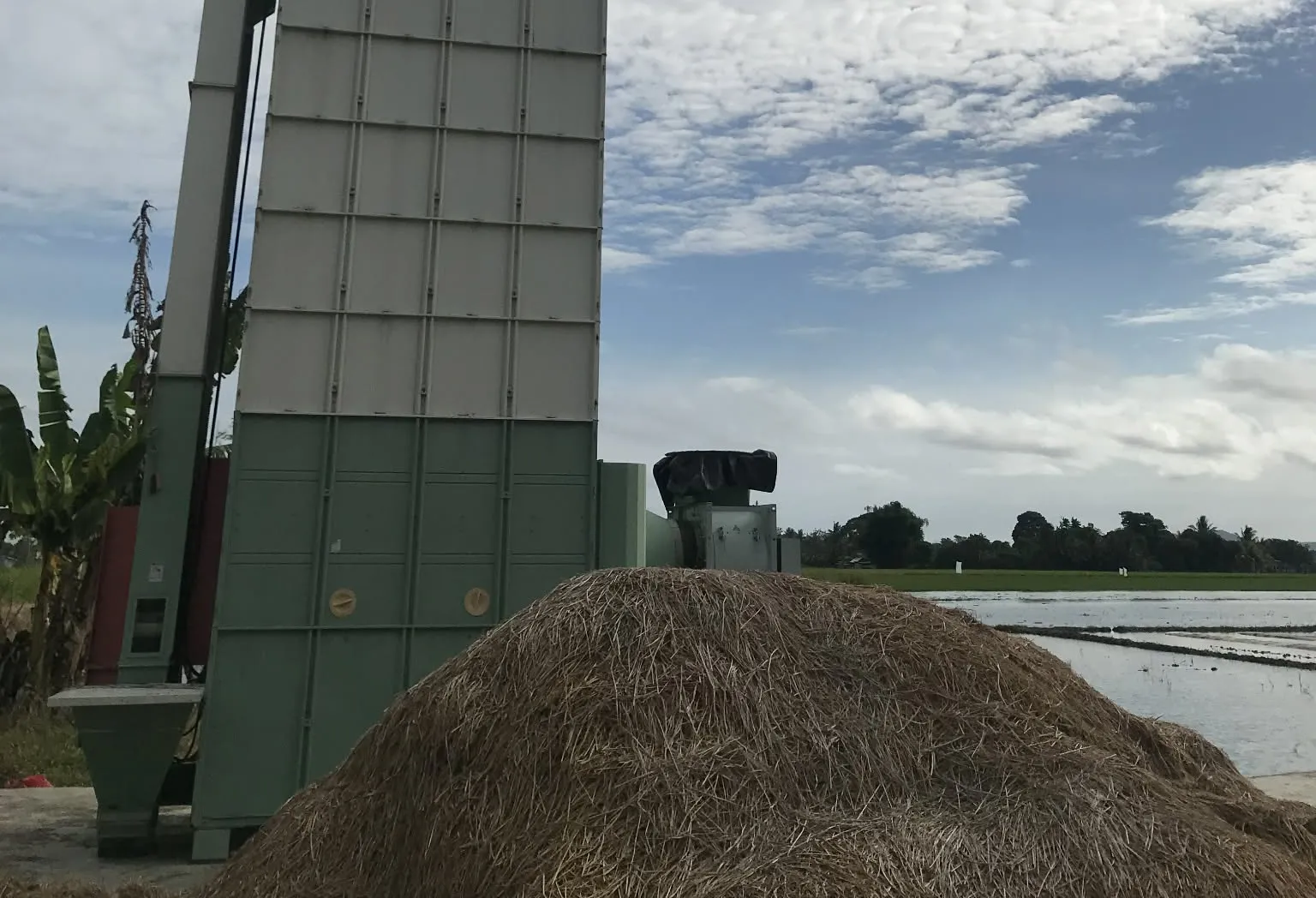
A palay dryer blows heated air through the grain. So it works at night and in the rain, with less labor. The table below weighs both methods fairly. Two kinds are common. A flatbed dryer holds the grain on a perforated floor with warm air pushed up through it. A recirculating batch dryer keeps the grain moving through a tall column.
| Point | Sun drying | Palay dryer |
|---|---|---|
| Weather | Stops in rain and at night | Works day or night, rain or shine |
| Labor | Needs more hands to spread and stir | Needs less labor |
| Heat control | Hard to control, so grain can overheat | Air temperature is controlled |
| Evenness | Thorough and complete if stirred | Can be uneven in a conventional flatbed |
| Cost | Low upkeep | Higher drying cost |
| Fungi and storage pests | Killed by the drying | Killed by the drying |
If you run or hire a dryer, follow these rules. Keep the air no hotter than 50 to 70 degrees C, for 5 to 8 hours. With dripping wet palay, blow unheated air for the first 1 to 2 hours, or until about 18 percent. Near 15 percent, lower the heat to 40 to 45 degrees C for the last 2 hours. Then stop at 12 to 14 percent.
Where can I find a palay dryer near me?
Start with your farmers' cooperative or irrigators' association. By September 2023, PhilMech had given qualified farmer groups 322 recirculating dryers of 6 tons per batch and 23 of 12 tons, under the Rice Competitiveness Enhancement Fund. It also gave six mobile grain dryers. These dryers can do custom drying for others too.
After that, ask your municipal agriculturist and nearby rice mills. These machines are often out of reach for small farmers alone, which is why they go to groups. Save the operators' numbers before harvest, not during it.
What does drying cost?
Fees differ by town and season, so compare these cost lines rather than one price.
- Sun drying: labor to spread, stir and bag, nets or canvas, hauling to the pavement, and losses to birds, dirt or a sudden shower.
- Dryer: the drying fee per bag or per batch, hauling to the dryer, and waiting time when every farm harvests at once.
- Both: the price gap between wet and dry palay, and the grain you save from heating or rain.
When a storm is coming at harvest, book the dryer the day you decide to cut. Never leave cut palay piled in the field for more than a day, because it heats up and discolors. Our guide to typhoon preparation covers the rest of the farm.
How should I store dried palay?
The last of the nine key checks covers drying, cleaning and storing together. Our guide to raising rice yield per hectare lists all nine. For storage, follow these steps.
- Clean the grain 2 to 3 days after drying, because chaff and empty grains hold moisture and cause hot spots.
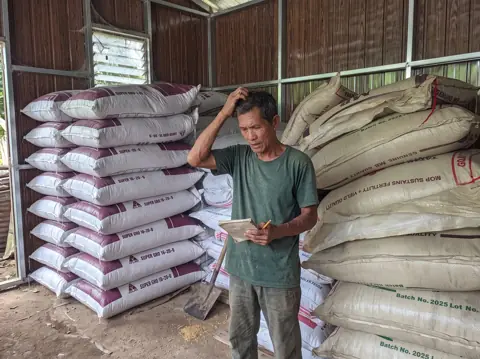
- Use clean sacks with a plastic lining, labeled inside and outside, on pallets.
- Pile up to 6 or 7 bags, with 1 m of space between piles, walls and the roof frame.
- Lift the top bag and feel the one under it for heat, and check the stacks once a week or more.
- Never store grain with fertilizer, chemicals or cement.
How does anee.io help with drying?
- See the rain coming. Satellite Weather plays back the rain radar over your farm, shows where rain clusters are heading hour by hour, and tracks typhoons. Libre shows weather for today and tomorrow, and Solo Farmer and Farm Owner add full weather.
- Plan the drying day. Put harvest, threshing and drying on your cropping calendar, with the dryer as a hired service so its fee lands in your expenses.
- Keep the numbers. Note each lot's yield, moisture, buyer and price in your harvest records, so next season you know what drying earned you.
- Keep the contacts. Save the harvester operator, the dryer and your buyers in the Contact List.
Sign up free, add your lots, and keep harvest moisture and prices on record season after season.
Start free