Palayan, Nueva Ecija: Capital of the Rice Granary and What Palayan Means
Palayan, Nueva Ecija is the capital of the country's rice granary, and its name says so: palayan means rice field. Here is how the city got its name and why Nueva Ecija grows so much palay. You will also learn what palayan means in English and how to draw a palayan scene for school.
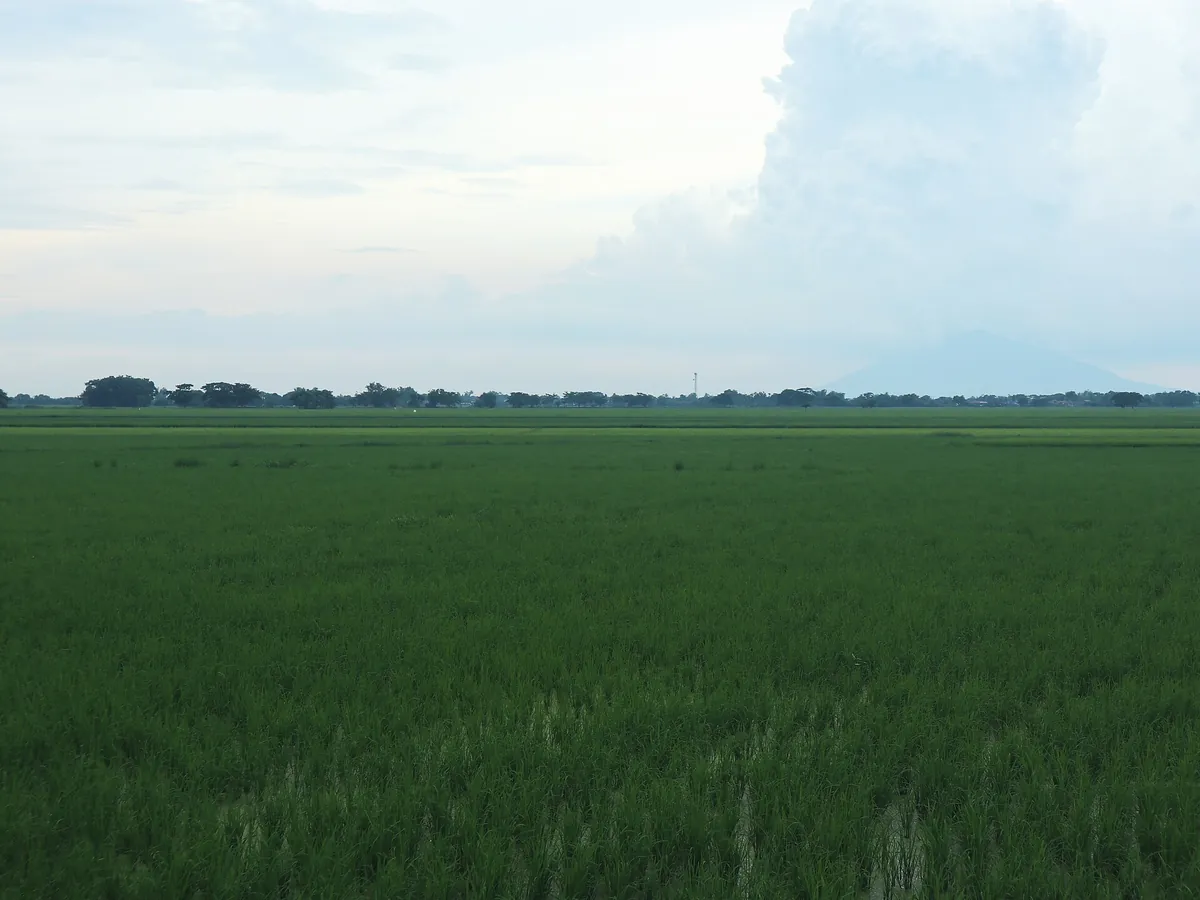
Palayan meaning and palayan in English
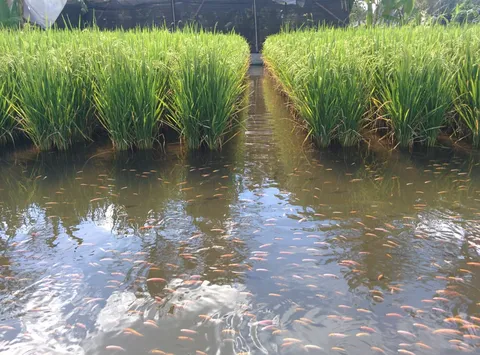
Palayan comes from palay, rice still in its husk, plus the suffix an, which marks a place. So a palayan is a place of palay: a rice field. Palayan in English is rice field, rice paddy or simply paddy.
You will also hear two related words in the field. Bukid means any farm field, while pilapil is the low earth dike around each paddy. For more words like these, see our list of farm words in Tagalog.
Palayan City, the capital of Nueva Ecija
Palayan City became the capital of Nueva Ecija through Republic Act 4475, approved on 19 June 1965. The law created the city on the site of a government stock farm in the towns of Laur and Bongabon. Its name reflects the province's title as the Rice Granary of the Philippines.
Today the new provincial capitol, a convention center and a sports center stand in the city. Palayan covers about 101 square kilometers in 20 barangays. With 47,883 people in the 2024 census, it is also the least populated city in the country. So the capital works more as a government center than a farm town. Still, its name keeps the province's rice story in plain sight.
Palayan with a small p means any rice field. Palayan City is the capital of Nueva Ecija. Search engines mix them up, so add the word City when you look for the place.
Why Nueva Ecija is the rice granary
Nueva Ecija has the largest rice area of any province, as PCIJ reported, and farmers call it the country's rice granary. Irrigation is a big reason. It lets many farms grow two crops a year, one in the dry season and one in the wet season.
For example, Pantabangan Dam, in the town of Pantabangan, has supplied irrigation water since 1977, with the National Irrigation Administration among its operators. In Guimba alone, PCIJ counted 15,000 hectares of rice, and 99 percent of those fields are irrigated.
PhilRice in the Science City of Muñoz
The province is also home to the national rice research institute. Executive Order 1061 created PhilRice on 5 November 1985, as a government corporation attached to the DA. Its headquarters and central experiment station sit in Maligaya, in the Science City of Muñoz. The station took that role in March 1990, and a grant from JICA of 15.7 million US dollars equipped its labs and training halls.
The next Philippine rice variety you plant may well come from that work. For example, NSIC Rc 216 (Tubigan 17) and NSIC Rc 402 (Tubigan 36) are PhilRice bred. Our guide to rice varieties in the Philippines compares these and the popular hybrids.
Is there a palay festival in Nueva Ecija?
We found no festival by that exact name in the province. Most people who search for a palay festival in Nueva Ecija mean Lakbay Palay. It is a field day that PhilRice holds twice a year, in the dry and wet seasons. It takes place at the PhilRice Central Experiment Station in the Science City of Muñoz. Farmers and students come to see new rice varieties, farm machinery and rice based farming systems. In 2023, about 50,000 farmers learned new technologies from it. That edition ran at the station, at seven branch stations and online.
If you want a true Palay Festival, Narra in Palawan holds one every mid or late October. Narra is known as the rice granary of Palawan, as our palay guide notes.
How farmers in Palayan, Nueva Ecija and nearby towns grow rice
Irrigated farms in the province follow a fairly standard season. The usual order goes like this, though days and rates vary by variety and water supply, so adjust them for your own field.
Rest and land preparation
After harvest the field rests for at least 30 days. Then farmers plow 21 to 30 days before planting and harrow every week until the field is level.
Seedlings or direct seeding
Farmers either transplant young seedlings, about 18 to 21 days old, or direct seed pre germinated seed, depending on labor and water.
Planting together
Farms in one irrigation area plant within 14 days of the local schedule. This synchronous planting breaks pest cycles.
Fertilizer and water
Nitrogen goes in early and again before panicle initiation. Meanwhile the field holds 3 to 5 cm of water through most of the season.
Harvest and selling
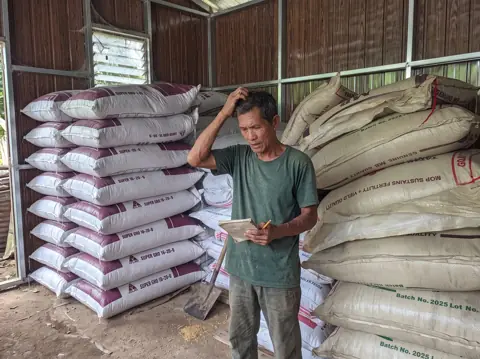
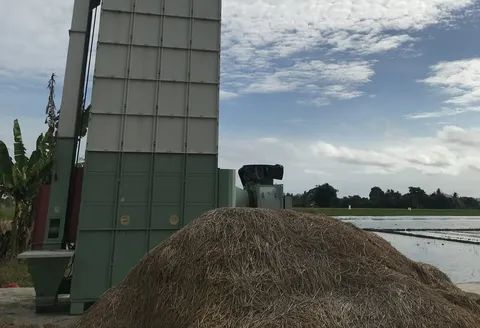
Farmers cut when most of the grains, about 85 percent, turn golden. Then they dry the palay and sell it to traders or the NFA, or store it for a better price.
Our Filipino guide to pagtatanim ng palay covers each of these steps in detail. When you are ready to sell, check the palay price today first.
Big seasons on many lots are easier to run with a plan. In anee.io you can draw and measure each field on satellite farm maps. Its cropping calendar then dates every task from each lot's own planting day.
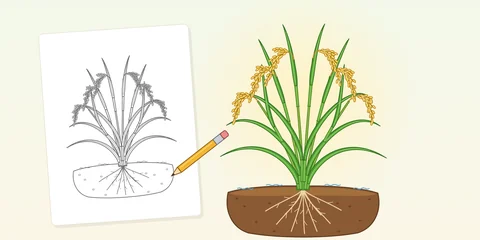
How to draw a palayan: a simple palayan drawing guide
A palayan drawing is a common school task. Here is a simple plan that looks like a real field in Nueva Ecija.
- Draw a low horizon line about one third from the top. Then add blue mountains far away, like the Sierra Madre on the eastern side of the province.
- Divide the ground into paddies with thin lines of pilapil. Make the paddies smaller as they go back, so the field looks deep.
- Pick a season. Draw rows of short green seedlings in water for planting time, or golden bent heads for harvest.
- Add life: a carabao, a farmer in a salakot, a small nipa hut and an irrigation canal.
- Color the water light blue between young plants. Use bright green for growing palay and yellow gold for a ripe field.
Want to get the plants right? Our palay guide describes what each growth stage looks like in a photo.
Map each paddy, date every task from its own planting day, and ask Anee in Tagalog or English when something looks wrong.
Start free