Palay Drawing: How to Draw Palay in Six Easy Steps, With Pictures
To draw palay, start with the ground and roots. Then add six thin stems, long arching leaves, drooping panicle stems and many small oval grains. This palay drawing guide shows each step in a picture, names the parts in English and Tagalog, and gives you a free PNG for school. anee.io, a farm app for Filipino farmers, drew every picture here.
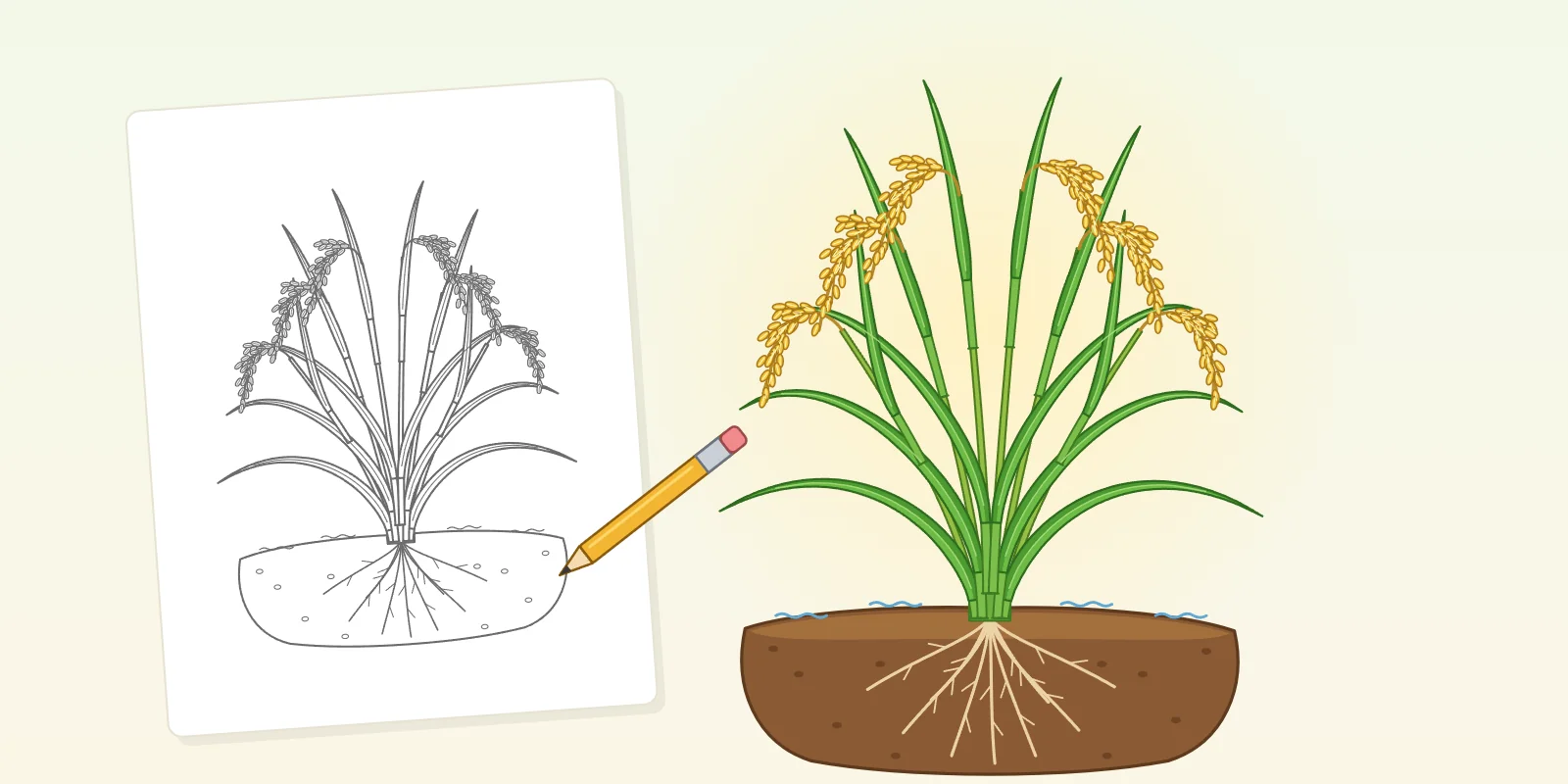
The palay plant in English is the rice plant, and palay also means its grain still in the hull. Our palay guide explains the word in full. For this drawing you only need a pencil, an eraser, paper and some colors.
- A rice plant is a clump of thin stems with long, narrow leaves and drooping heads of grain.
- Draw it in six steps: ground and roots, stems, leaves, panicle stems, grains, then details.
- Color the leaves in two greens and the grains golden yellow.
- Save the free palay PNG and the palay cartoon for school use.
What are the parts of the palay plant?
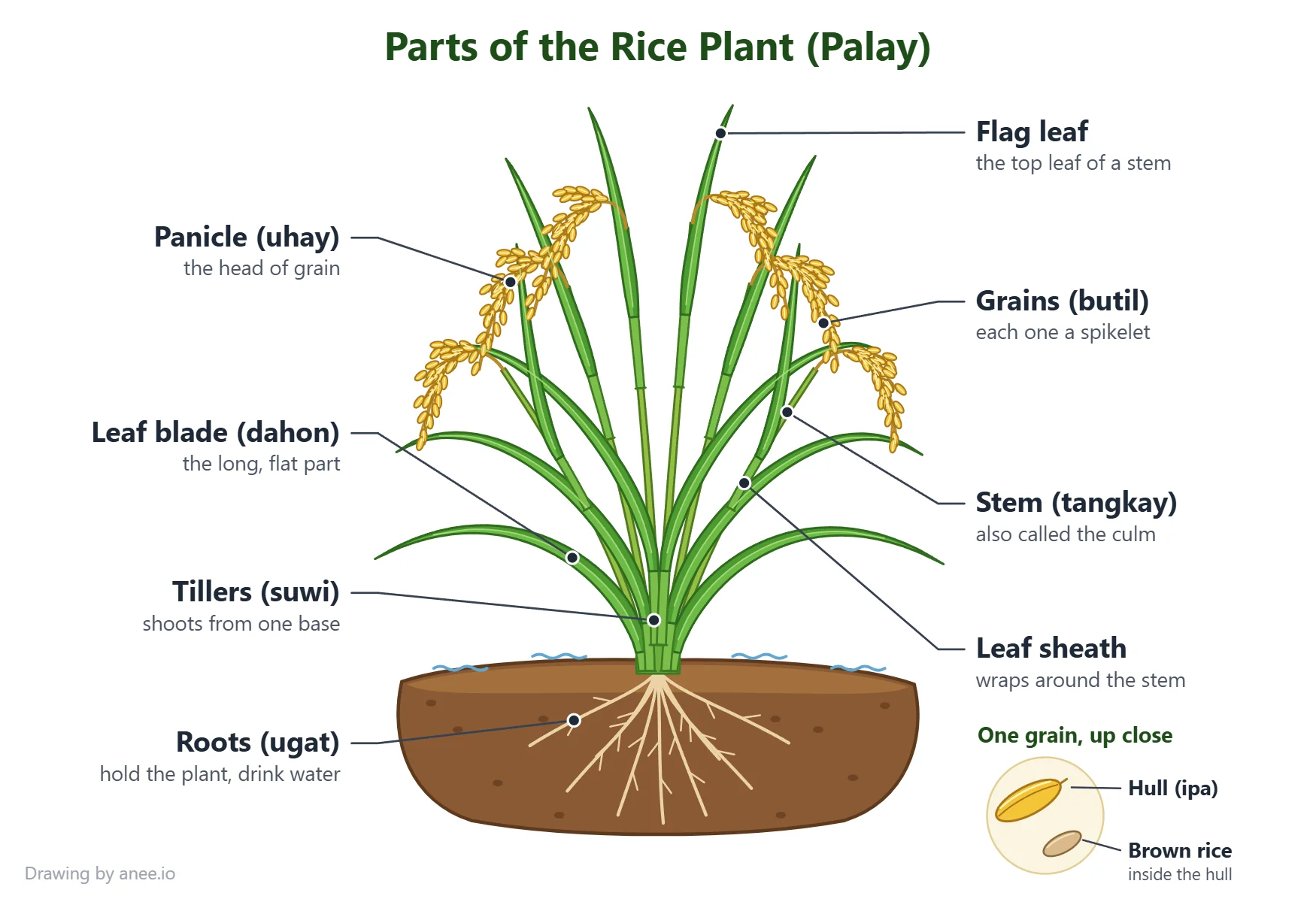
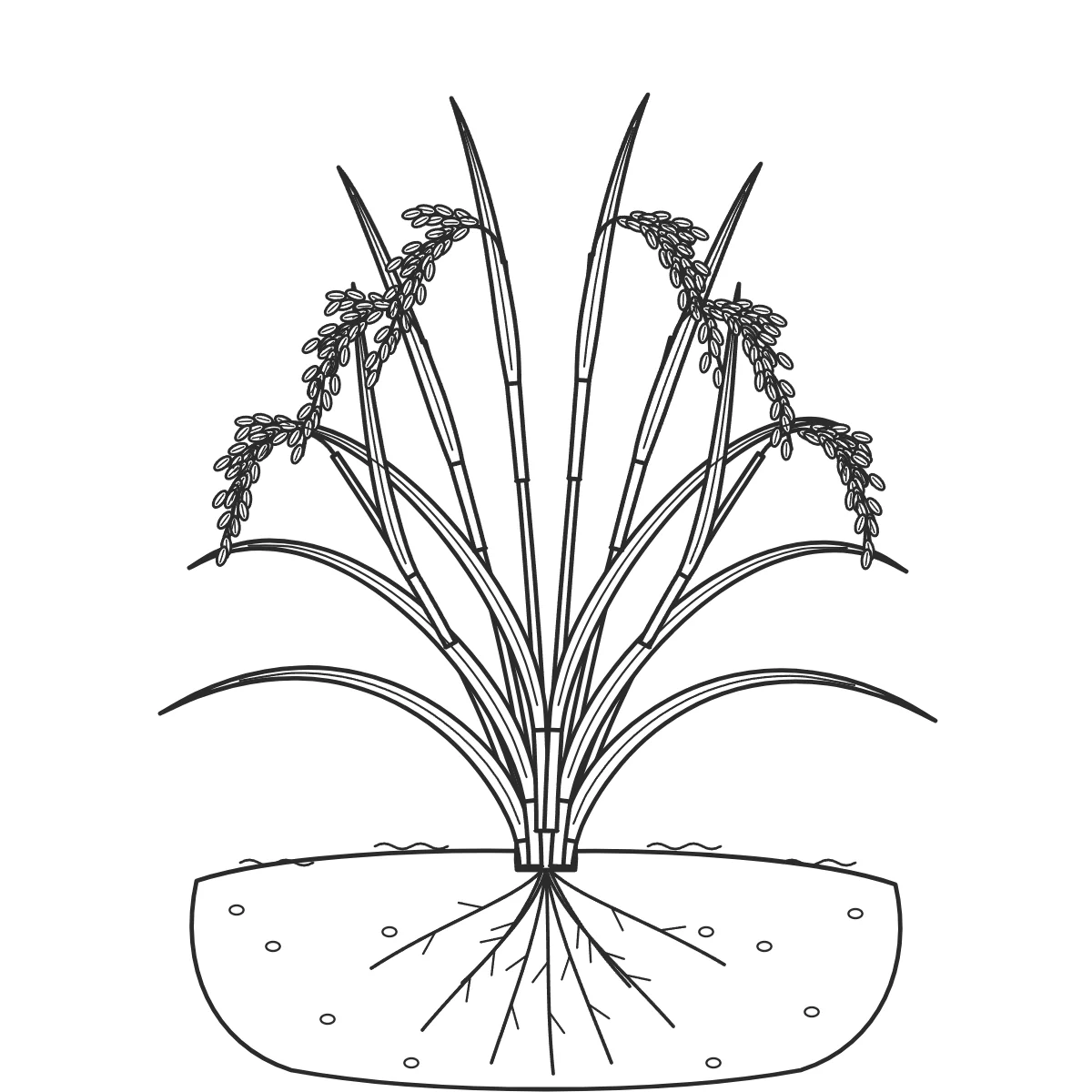
Every rice plant has the same parts, and each one has a shape you can copy. The drawing below names them in English, with the Tagalog word in brackets.
| Part | Tagalog | How to draw it |
|---|---|---|
| Roots | ugat | Thin lines spreading under the soil |
| Stem or culm | tangkay | A thin tube carrying leaves and panicle |
| Tillers | suwi | Many stems from one base |
| Leaf sheath | said in English | A sleeve wrapped around the stem |
| Leaf blade | dahon | Long, narrow and pointed, arching out |
| Flag leaf | said in English | The short top leaf under the panicle |
| Panicle | uhay | The head that bends over as grains fill |
| Grains or spikelets | butil | Small ovals on short branches |
Rice scientists sort these parts in a standard way. The panicle axis is straight or droopy, and the flag leaf runs from erect to descending, so a drooping head beside an upright flag leaf is true to life. A plant with 10 to 19 tillers counts as medium, so six stems make a fair, simple clump. For more farm words, see our English Tagalog farm glossary.
How do I make an easy palay drawing, step by step?
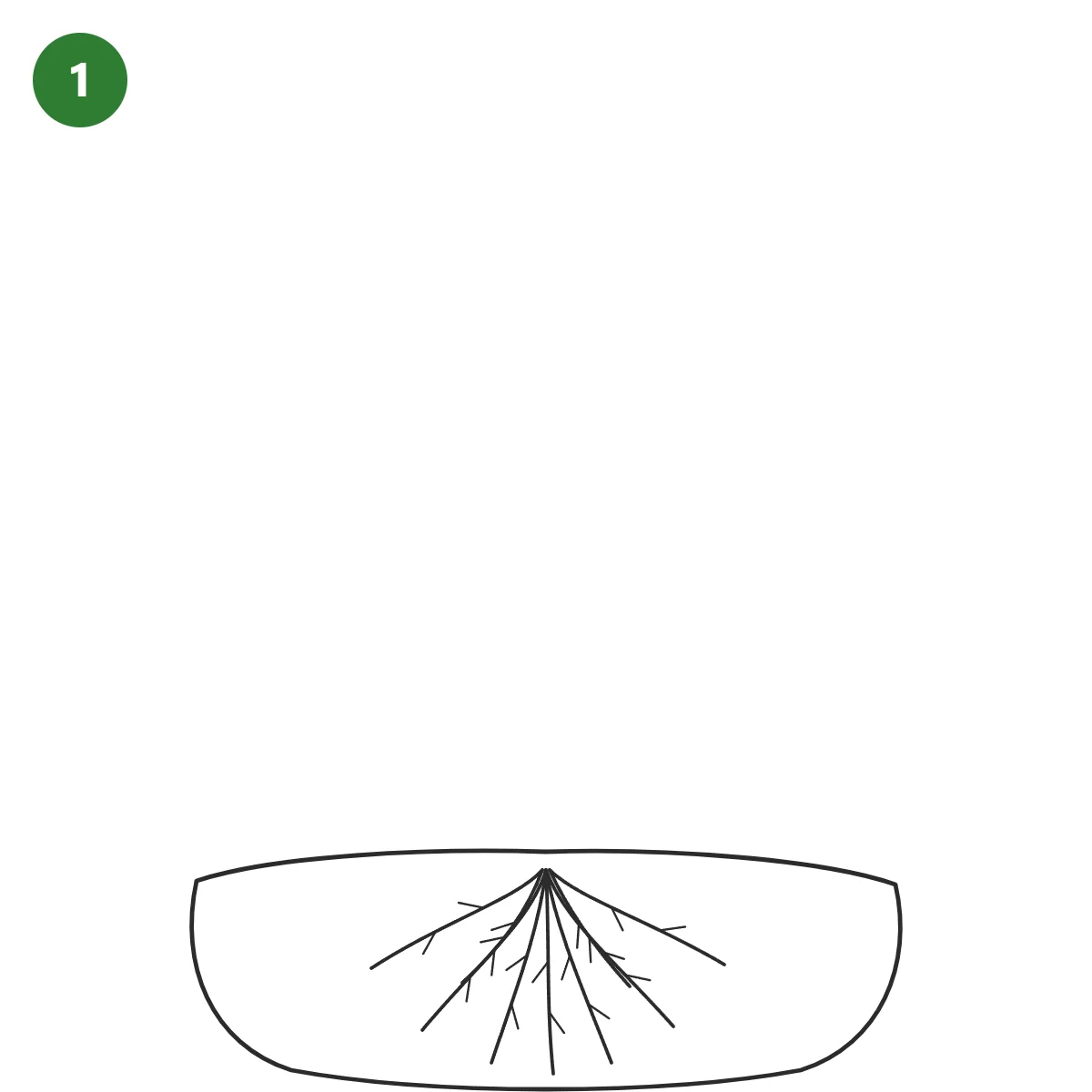
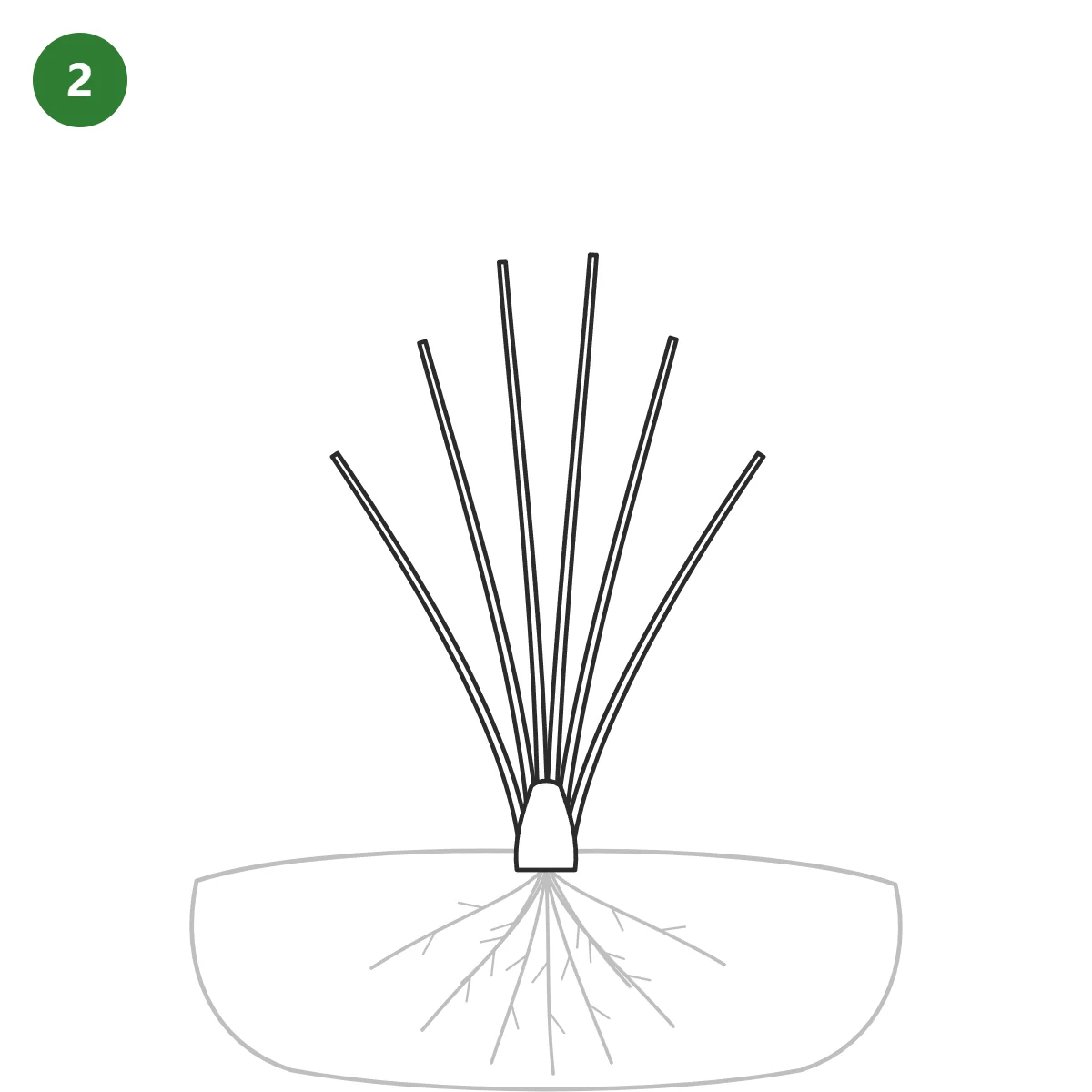
Sketch with light pencil lines so you can erase. In each picture, gray lines show what you already drew and dark lines show the new step.
Step 1: Draw the ground and the roots
Draw a long, gentle curve for the ground and round it off below like a bowl of soil. Then, from the middle, draw eight or nine thin roots that spread down and out.
Step 2: Draw the stems, or tillers
From that same point, draw six thin stems that fan out like an open hand. Keep the middle ones nearly straight, and wrap the base with a short sleeve so the stems look bundled.
Step 3: Draw the leaves and the flag leaves
Rice leaves are long, narrow and pointed. Start each one at a stem, follow the stem up a little, then let it arch out and down to a sharp tip. After that, add a short flag leaf near the top of the middle stems, pointing up.
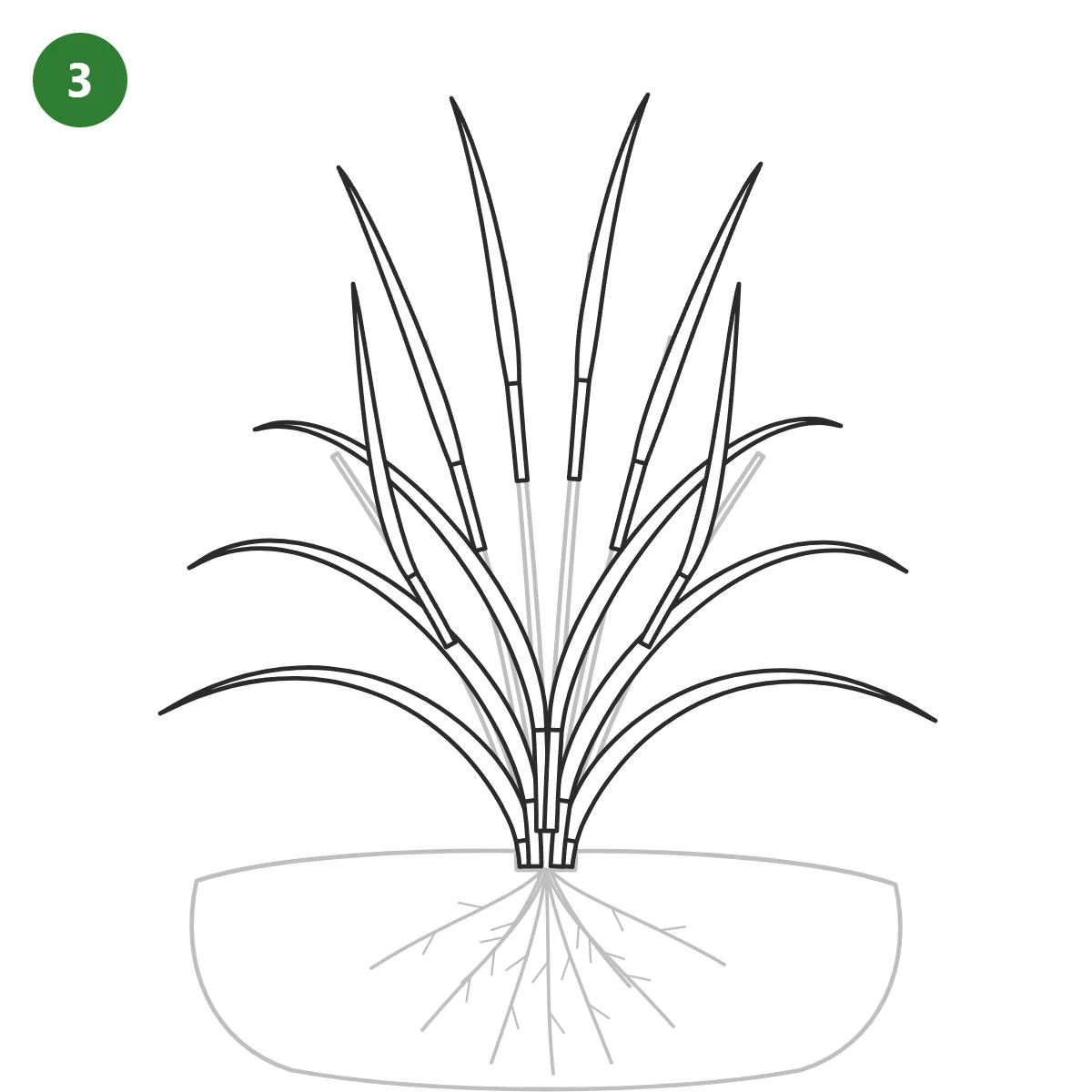
Step 4: Draw the drooping panicle stems
At the top of each stem, draw a panicle stem that rises a little, bends over like a hook and droops to the side. Next, hang five to seven short branches from it.
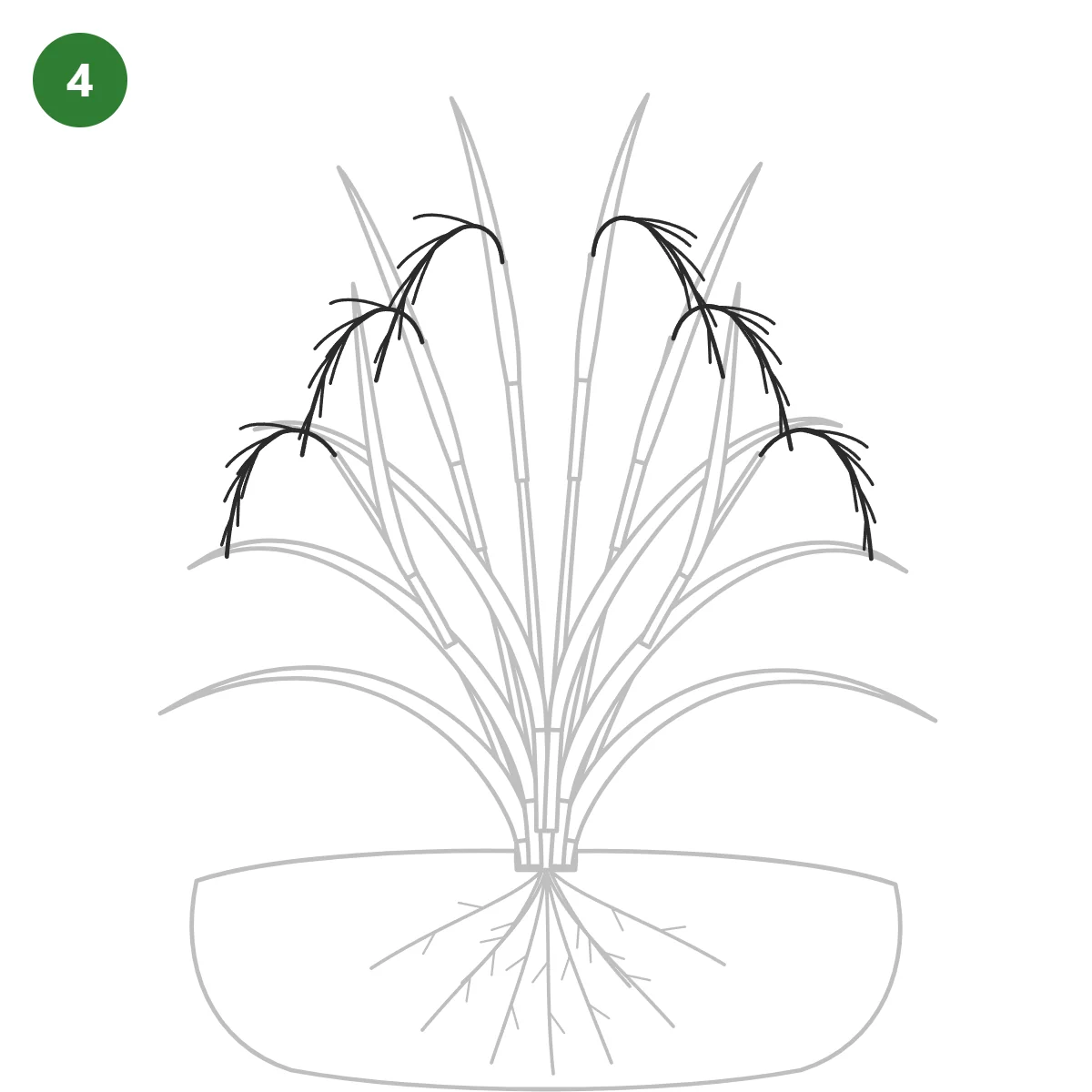
Step 5: Draw the grains
Now add small ovals along each branch and down to the tip, packed close on both sides. This step turns your sketch into palay, so take your time.
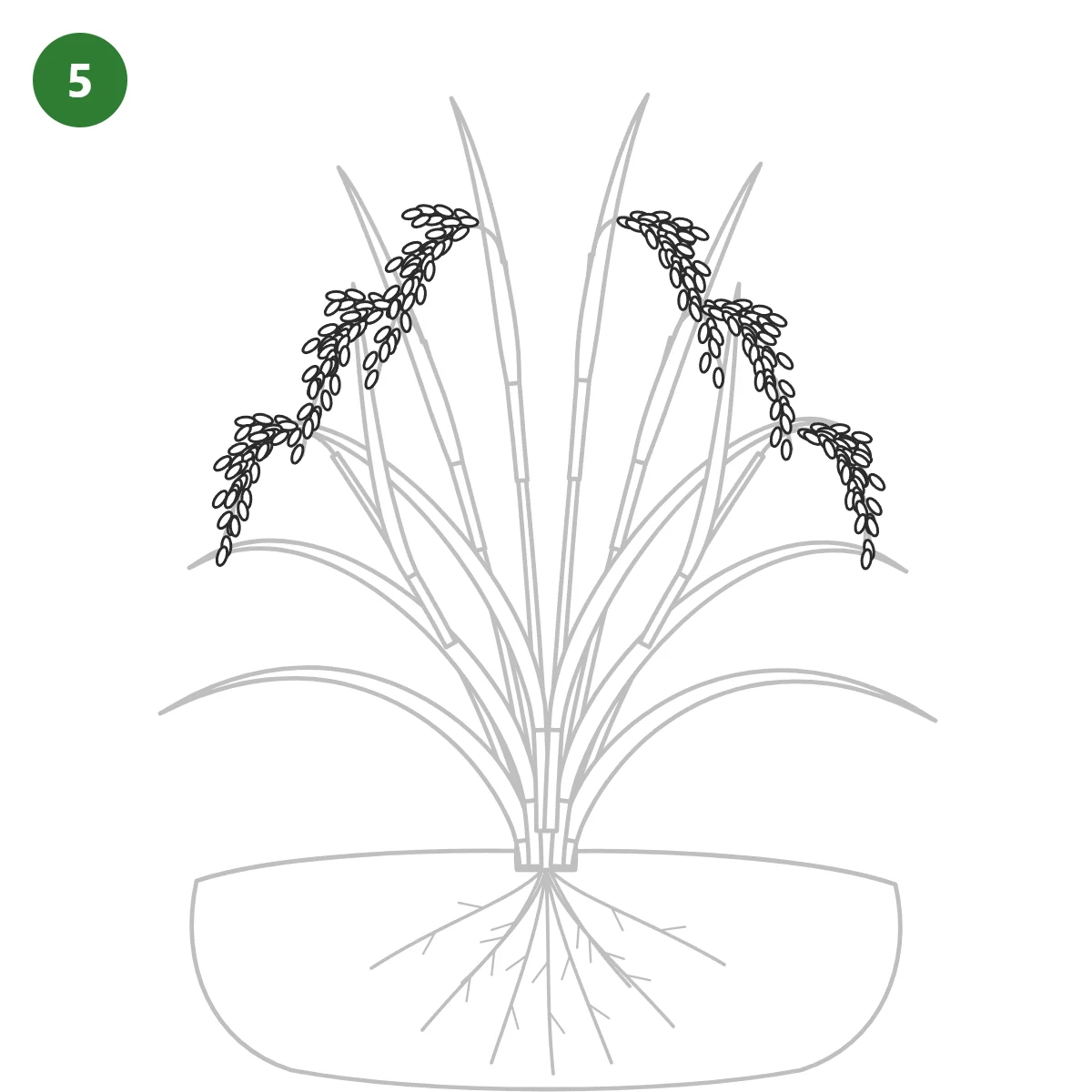
Step 6: Add the finishing details
Finish with a line down each leaf, a small band where each leaf starts and a short line on every grain. Some ripples of water show that palay grows in a flooded field.
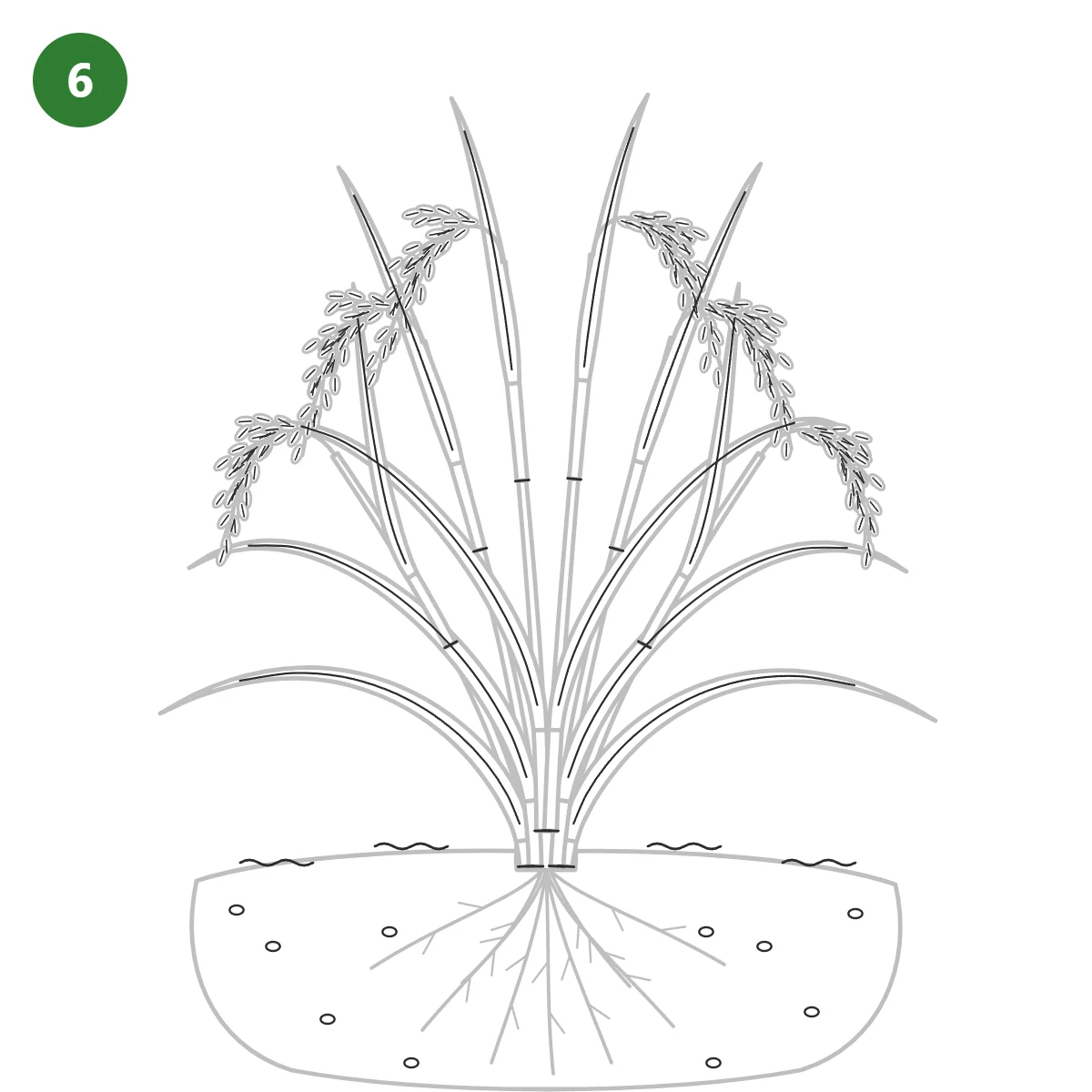
If your drawing looks like grass, add more grains and bend the heads lower. Farmers read heads too: they call a white panicle with empty grains a whitehead, a sign of rice stem borer. Golden and heavy means a good harvest.
Palay drawing with color: which colors should I use?
Use two greens for the leaves and golden yellow for the panicles and grains. If you only have a few crayons, color one half of each leaf darker, so the leaves look round instead of flat.
| Part | Color | Tip |
|---|---|---|
| Leaves | Light and dark green | Shade one half of each leaf |
| Stems | Yellow green | Thin, mostly behind the leaves |
| Grains | Golden yellow | Outline in brown |
| Soil and roots | Brown, with cream roots | Dots for pebbles |
Golden yellow is the true color of ripe palay. Palay is ready to harvest by hand when 85 to 90 percent of the grains turn golden yellow, so a few greenish grains look real. Still, hulls range from straw and gold to brown, purple and black, so check a photo before you draw a special variety.
For a palay painting in watercolor or poster paint, lay down the light green first, then add the dark green once it dries.
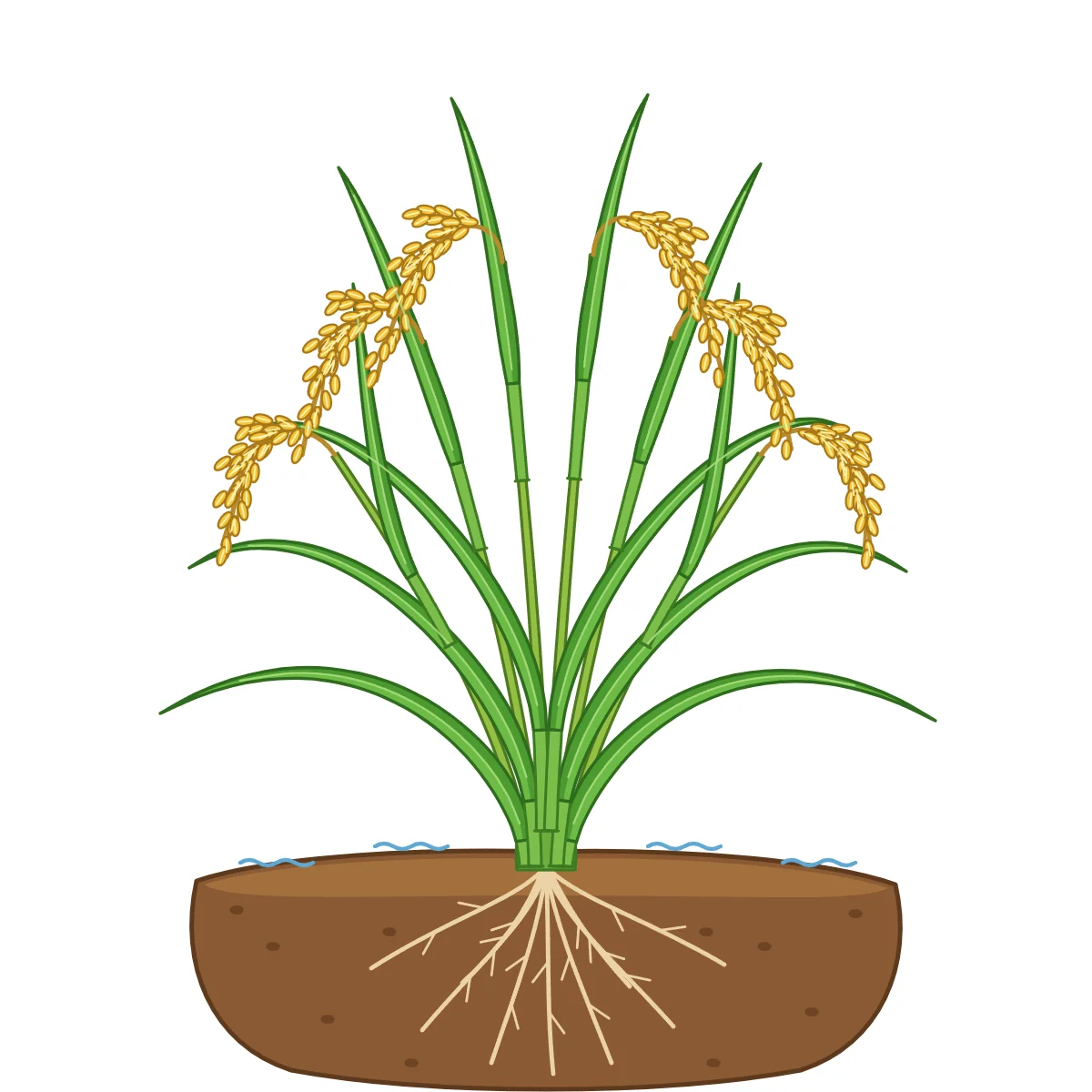
Where can I get a free palay PNG or palay clipart?
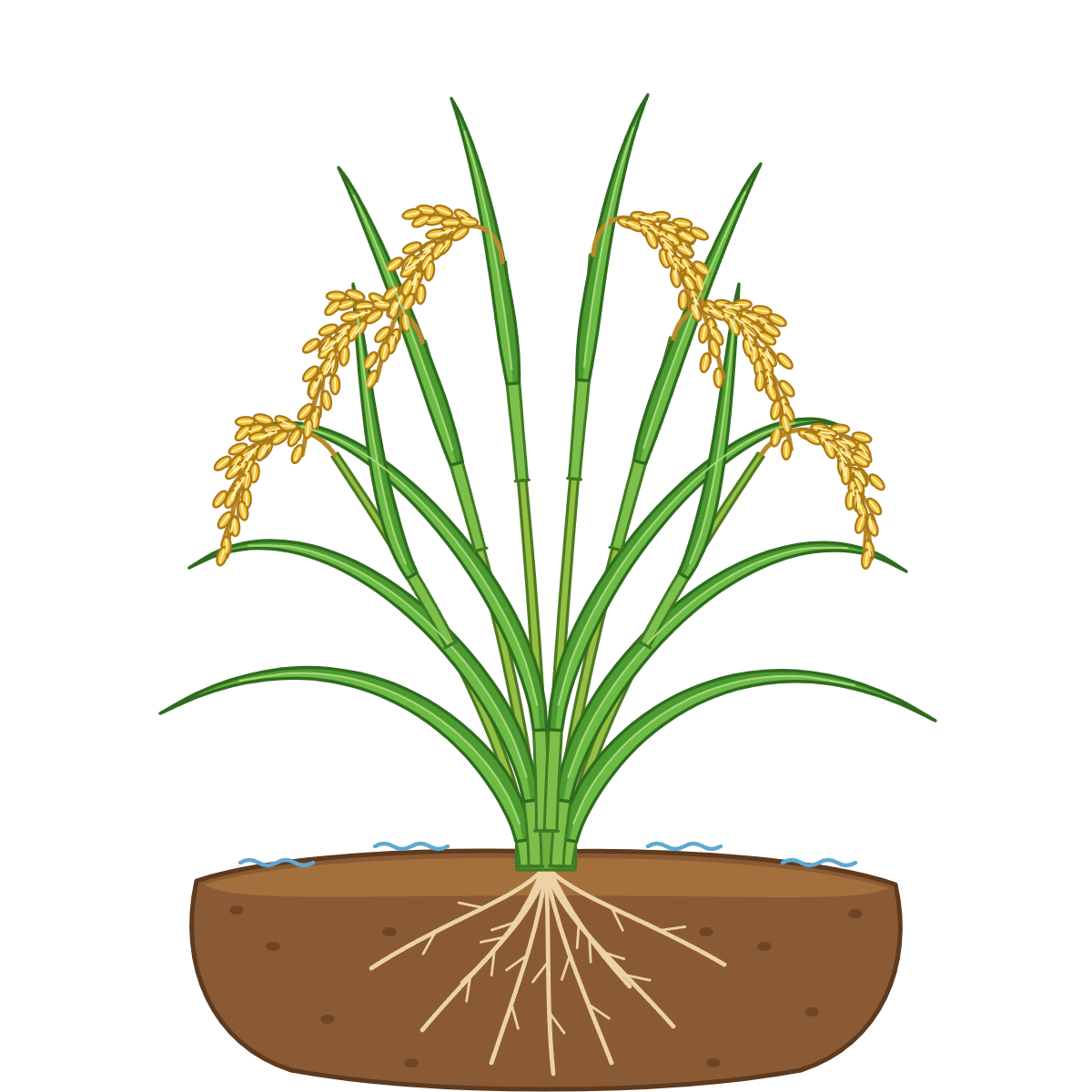
Right here. Students look for palay clipart or a palay PNG because a picture with a clear background sits neatly on any poster or slide.
Farmers who grow palay plan it with anee.io: every task dated, each field's growth stage, and Anee answering in Tagalog or English.
Start freeHow do I draw a palay cartoon?
Keep the same parts but make them round and simple: a plump green body for the stems, a fan of wide leaves and three panicles with chunky grains. Then put a face on the body with dark eyes, pink cheeks and a small smile. Thick outlines help it read from across a room.

If you look for palay cartoon images online, check who owns each one before you print it.
Ideas for a palay poster, props, costume or background
A palay poster
Put a big palay drawing on one side and your title on the other, then label the parts like the diagram above. For a story to go with it, read the Alamat ng Palay.
Palay props for a school program
Palay props are easy to make from cardboard and colored paper.
Trace
Print the color drawing or the cartoon and trace it on cardboard.
Cut
Cut around it with a small border so thin leaves do not tear.
Color
Paint it, or glue the printed picture on top.
Mount
Glue yellow paper ovals on the panicles, then tape a stick to the back.
A palay festival costume
When a school program calls for a palay festival costume, build it from the same parts. First, make a headband or hat with paper panicles drooping from it. Next, add a cape of long green paper leaves. Finally, wear a sash dotted with golden paper grains.
A palay background, a palayan drawing or a logo
For a palay background, draw rows of small clumps that shrink toward the horizon. A full palayan drawing, a rice field with dikes and mountains, is on our Palayan, Nueva Ecija page. For a palay logo, use one panicle and one leaf, since fewer lines print better small. And for an animated palay, put the six step pictures on six slides and click through them.
If your family grows the real crop, see our guide to pagtatanim ng palay, or the growth stages tool in anee.io.