Ant Bait and Termiticides: Controlling Ants and Termites on the Farm
An ant bait is food mixed with a slow acting insecticide. Worker ants carry it home and share it, so the poison reaches the queen and the brood that you never see. Termites need a different approach, with termiticides and good housekeeping around wood. This guide covers both, for the farm, the nursery and the house, and it tells you which agency regulates which product.
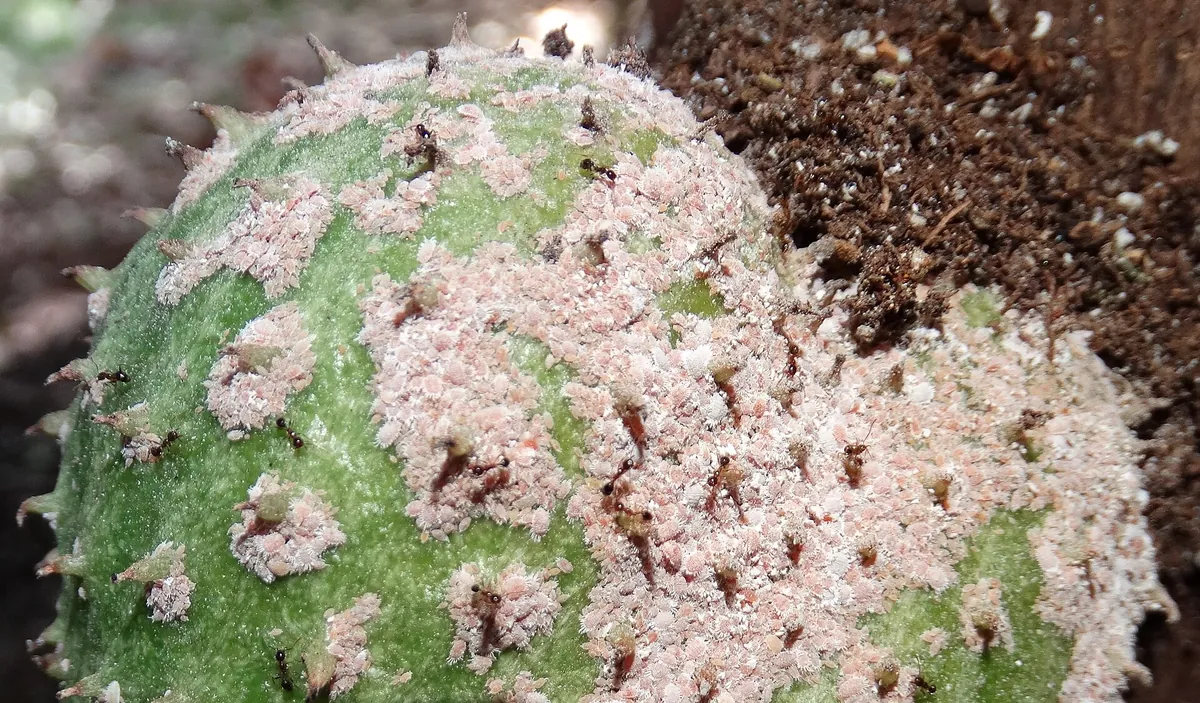
Most ants do little direct harm to crops. The trouble is what they protect. Ants guard mealybugs, aphids and scale insects for the sweet honeydew they give off, and they chase away the ladybugs and wasps that would eat them. So a mango branch or a pineapple row full of ants often hides a sucking pest problem. Our guide to hanip, mites and aphids covers the sap suckers themselves.
Ants also carry off seeds from seedbeds, move into pots in the nursery and bite the hands of workers. But not every langgam is an enemy. Red weaver ants, the big biting hantik that sew leaves into nests, hunt many pests in mango, citrus and cacao. Research programs in the Philippines study them as biological control, so think twice before you poison a hantik tree.
How an ant bait works
An ant bait has two parts: a food the ants want and an insecticide that kills slowly. The slowness is the point. The poison has to work slowly, so the workers still make it home to the nest before they die. Back inside, they feed the bait to the other workers, the larvae and the queens.
A spray works the other way around. It kills the foragers you see and leaves the nest alive, and the queen keeps laying. That is why UC IPM advises against using insecticide sprays while you are baiting.
Types of ant bait
- Gel baits come in a tube or syringe. You put small dots in cracks and along trails, which suits kitchens, stores and bodegas.
- Granular baits look like fine grits or corn meal. You scatter them near nests and trails outdoors, and some are registered for field use in pineapple.
- Liquid baits are sugar water with a slow poison, usually in a refillable station. Sweet loving ants that tend mealybugs often take them readily.
- Bait stations are small closed boxes or stakes that hold gel, liquid or granules. They keep the bait away from children, pets and chickens.
What is inside the bait
| Active ingredient | IRAC group | Where farmers meet it |
|---|---|---|
| Hydramethylnon | 20A | granular ant bait registered with the FPA for ants in pineapple |
| Fipronil | 2B | household gel baits, and corn seed treatments that list ants among their targets |
| Boric acid and other borates | 8D | household liquid and gel baits |
| Abamectin | 6 | some household ant baits |
Hydramethylnon is a good example of why slow matters. It blocks how the insect's cells make energy instead of attacking its nerves, and ants must eat it to be affected. Several hydramethylnon ant bait products appear on the FPA list for pineapple, so read the label of the one you buy.
Using ant baits on farms, nurseries and homes
Follow the trail
Watch where the ants march at dawn or toward evening. Put the bait on or right beside the trail, as close to the nest as you can.
Keep it off the crop
Place baits on the ground or in stations, not on leaves or fruit. On a farm, use only an ant bait whose label names your crop.
Stop spraying nearby
Do not spray Karate, Cymbush or any other insecticide on the same trail while you bait, or the ants will die before they share it.
Give it days, not hours
Refill the bait when it runs out. Colonies shrink over several days, and a big nest may need more than one round.
Check the sucking pests
Once the ants go, look again at the mealybugs or aphids they were guarding. Their natural enemies can now reach them.
For the house and the sari sari store, remember that household ant baits are not an FPA matter. The FPA says a 2007 Supreme Court ruling placed pesticides for urban and household use under the Food and Drug Administration. So a household ant bait should carry FDA registration, which you can check on the FDA verification portal.
Termites and termiticides on the farm
Anay, or termites, eat wood and anything else made of cellulose. Some species attack living plants too. The Asian subterranean termite, also called the Philippine milk termite, prefers living trees such as mango, citrus, coconut and cassava. Young seedlings and newly transplanted trees suffer most, because termites can hollow out the roots and the base of the stem.
Watch for thin mud tubes running up trunks and posts, wood that sounds hollow when tapped, and young trees that wilt for no clear reason. Then remove old stumps, buried lumber and dead roots near the nursery, since these feed and shelter colonies. Also keep mulch and wood chips a hand's width away from the base of young trees.
Termiticides for coconut and fruit trees
Check the label before you buy termiticides for crops. When we searched the FPA list of registered agricultural pesticides as of August 31, 2026, the termite listings we found were imidacloprid products for sugarcane. We did not find a termite listing for coconut, mango or other fruit trees. So ask your municipal agriculturist or the Philippine Coconut Authority first, and use only a product whose label names your crop and termites. See our guides to fertilizing coconut and growing fruit trees for the rest of tree care.
Termiticides for farm buildings
Termite work on houses, bodegas and farm sheds falls under household and urban pest control, which the FDA regulates. Under a 2022 FDA circular, a pest control company needs an FDA license to operate and may use only FDA registered household pesticides. So hire a licensed operator and ask to see the license. You can also help by keeping lumber off bare soil, fixing roof and pipe leaks, and using treated wood for posts.
Keep every bait out of reach of children, pets, chickens and pigs. Never put baits near wells, water jars or food. Wear gloves when you handle termiticides, and follow the label on dose, placement and disposal. If a child eats bait, bring the label to the nearest health center right away.
Track it in anee.io
In anee.io, you can send a photo of ants on a plant to Anee, the smart farm technician, and ask what pest they are guarding. The farm inventory keeps count of your baits and termiticides and what each one cost. And a reminder on the cropping calendar tells you when to check and refill the bait stations.
Ask Anee about a photo in Tagalog or English, keep your baits in the inventory, and set reminders for every bait check.
Create a free account