

Fruits and Plantation Crops
Not sure it is this pest? Use the Pest Finder in anee.io ›
Tamarind seed beetle
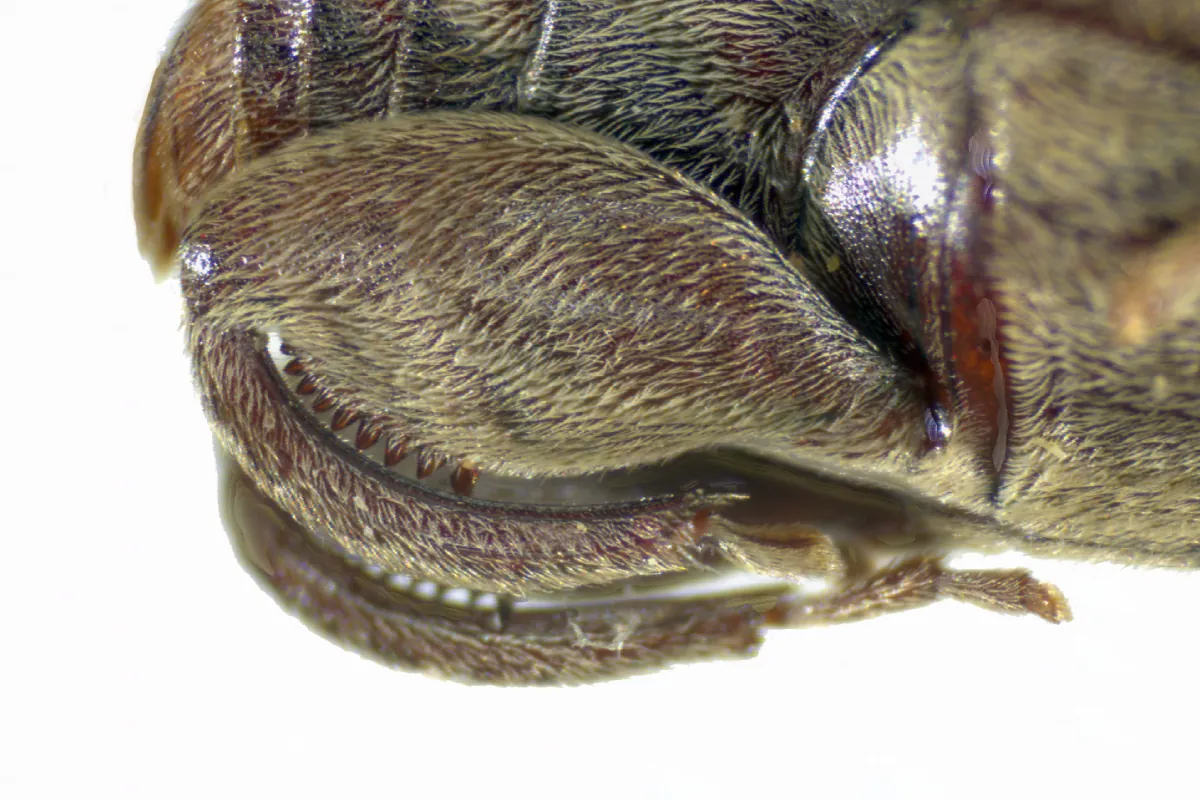
Small brown beetles and their grubs bore into the pods and seeds, leaving round exit holes and powder, and the damage keeps growing in stored pods.
Crops it attacks
Where the damage shows
On fruits, pods or nuts
When to act
At harvest and every month in storage, open 20 pods or a handful of seeds and look for round exit holes, powder and grubs. Any live beetle in storage means sort, dry and reseal the stock at once.
Before you spray
Sprays do not reach grubs inside pods and seeds. Sun dry, shell and seal tamarind in airtight containers.
On labels for it, but not advised
- Quinalphos: Old toxic organophosphate with no label for this beetle. Sprays do not reach grubs inside pods and seeds.
How to prevent it
- Harvest pods as soon as they ripen. Do not leave them hanging long or lying on the ground.
- Sun dry the pods well, then shell them and take out the seeds. The grubs grow inside the seeds.
- Store the pulp and any seeds kept in airtight jars or sealed bags, away from old stock.
- Throw out or burn infested pods and clean the storeroom before the new harvest comes in.
- Small lots can be frozen for a few days to kill eggs and grubs before storing.
Not sure it is this one?
Many pests look alike. Send a photo to Anee, the smart farm technician in anee.io. She reads it with your crop, its age and the weather, and tells you what it most likely is and what to do first. In Tagalog or English.