

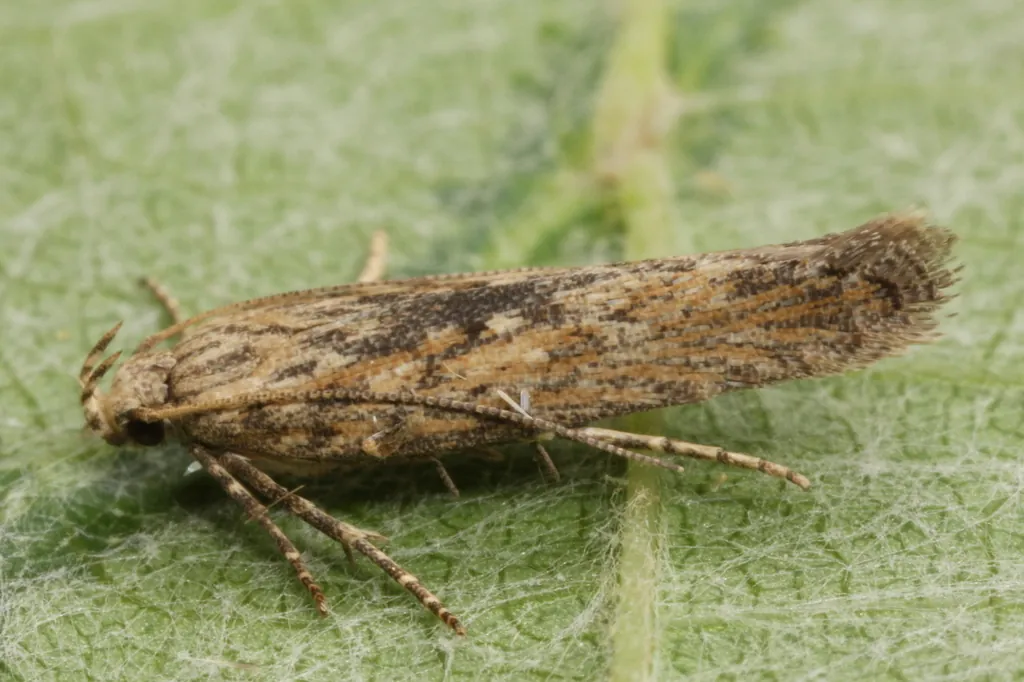
Potato tuber moth
Small caterpillars mine the leaves and stems, then tunnel into tubers near the surface and in storage, leaving holes with dark droppings.
Crops it attacks
Where the damage shows
When to act
Hang sex pheromone traps in the field and in the store, and read them weekly. Act when catches climb and mined leaves show on more than 1 in 10 plants. Near harvest, protect tubers by hilling rather than spraying.
What to spray
- Cartap hydrochlorideIRAC 14ShopeeLazada
- ProfenofosIRAC 1BShopeeLazada
- ChlorpyrifosIRAC 1BShopeeLazada
- PermethrinIRAC 3AShopeeLazada
Active ingredients only, never brands. The IRAC group tells how it works: switch to a different group next time, so the pest does not learn to survive it. Spray only when the damage is worth the cost, and only with products registered with the Fertilizer and Pesticide Authority for your crop. Follow the label. The Shopee and Lazada links only show who sells something with that active ingredient, not a recommendation of any seller or product.
How to prevent it
- Plant clean, whole seed tubers. Never plant tubers with tunnels.
- Hill up well so tubers stay at least 5 cm under the soil, and water in dry spells so the soil does not crack.
- Harvest soon after the vines die, and never leave dug tubers in the field overnight.
- Store seed tubers in a clean, screened store, covered with dry leaves of lantana or eucalyptus to keep moths off.
- Destroy cull tubers and volunteer potato plants, and rotate away from potato, tomato and eggplant.
Natural enemies and biological help
- Bt powder dusted on stored seed tubers protects them for months.
- Small wasps attack the larvae in leaves and tubers. Spare them by spraying less in the field.
Where this comes from
Not sure it is this one?
Many pests look alike. Send a photo to Anee, the smart farm technician in anee.io. She reads it with your crop, its age and the weather, and tells you what it most likely is and what to do first. In Tagalog or English.