Molybdenum in Plants: What It Does and When Your Crop Needs It
Molybdenum in plants is the smallest need of all, often less than a hundred grams per hectare, yet without it a crop cannot use the nitrate it takes up, and a legume cannot fix nitrogen. Acid soils run short most often. Here is what it does, which crops need it most, and how little it takes to fix.
What molybdenum does in plants
Molybdenum is part of the enzyme that turns nitrate, the form most nitrogen reaches the roots in, into a form the plant can build protein with. A plant short of it piles up nitrate and still looks hungry for nitrogen.
In legumes like mungbean, peanut, sitaw and soybean, molybdenum is part of the enzyme in the root nodules that fixes nitrogen from the air. So a legume short of molybdenum stays pale and yields little, however well its nodules form.
A helper, the smallest need of all
Molybdenum is a helper. It sits inside two or three enzymes and works without being used up, so a crop needs less of it than of any other nutrient.
That tiny need is why a seed treatment or a single light spray is usually enough for a whole season.
| Fact | Molybdenum |
|---|---|
| Group | Micronutrient |
| Kind of nutrient | Helper |
| Moves inside the plant | Fairly well |
| Where a shortage shows first | The old and middle leaves, pale like nitrogen |
| Taken up as | Molybdate |
Where molybdenum shows first
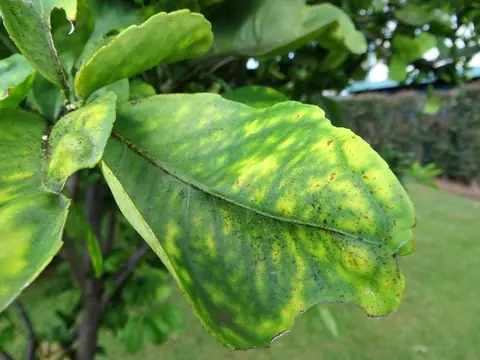
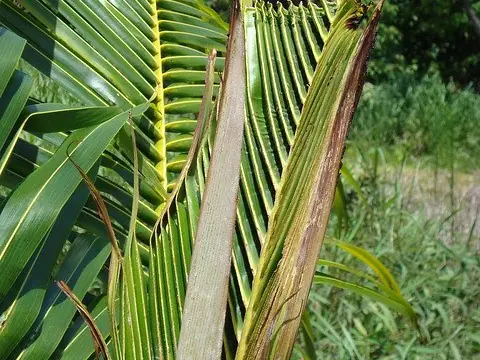
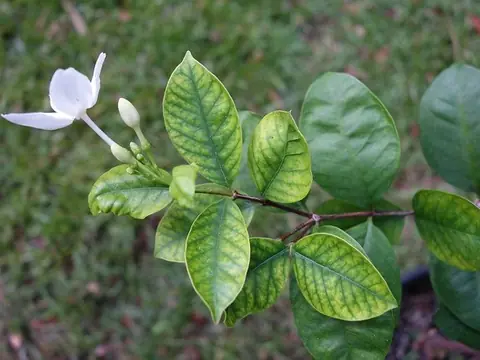
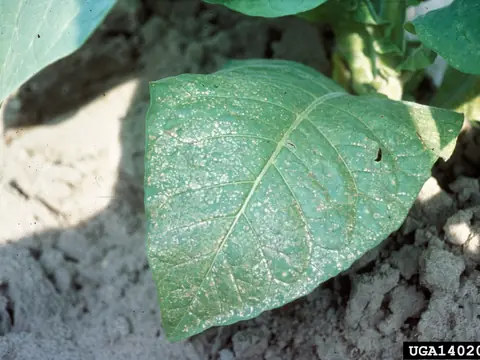
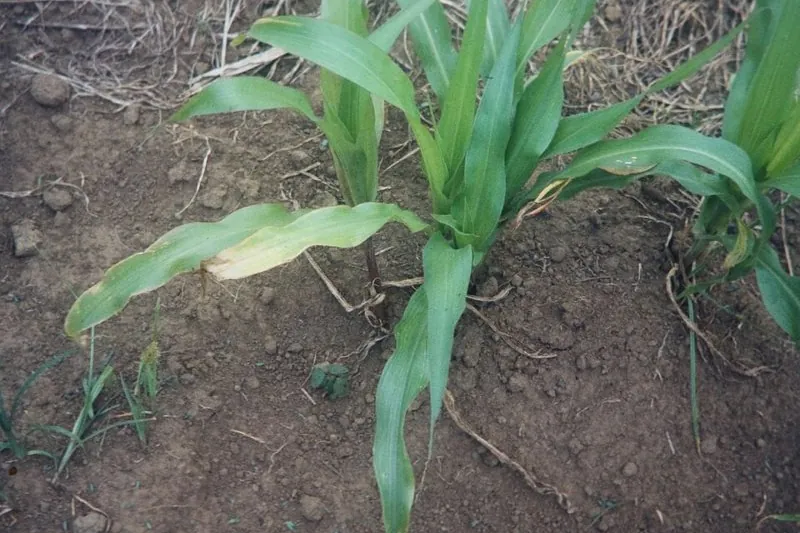
Molybdenum moves fairly well inside the plant, and because it works through nitrogen, its shortage looks like nitrogen shortage: pale older leaves, slow growth and in legumes, poor nodules. Cabbage and cauliflower get narrow, ragged leaves called whiptail.
See molybdenum deficiency for the signs crop by crop.
When molybdenum in plants is most critical
Molybdenum matters most for legumes while their nodules form and work, and for cabbage, cauliflower and other crucifers in their early growth. Palay needs almost none.
DAT means days after transplanting, DAS days after sowing in the field, and DAP days after planting. The days are the usual ones for a typical variety, so a long or short variety moves them a little. Timing molybdenum in plants to these windows gets more harvest from the same bags. Our guide to fertilizer timing by growth stage puts them together for a whole season.
Here is when each crop needs it most, from the anee.io stage book:
Rice, corn and other grains
| Crop | Most critical | Also needed | Why it matters then |
|---|---|---|---|
| Palay, transplanted | No stage stands out | Small amounts the rest of the season | Rice needs almost no molybdenum. |
| Palay, direct seeded | No stage stands out | Small amounts the rest of the season | Rice needs almost no molybdenum. |
| Yellow corn | No stage stands out | Small amounts the rest of the season | Corn needs only a trace of molybdenum. |
| Sweet corn | No stage stands out | Small amounts the rest of the season | Corn needs only a trace of molybdenum. |
| Other grains (sorghum) | No stage stands out | Small amounts the rest of the season | Molybdenum is not a concern for this crop now. |
Vegetables and legumes
| Crop | Most critical | Also needed | Why it matters then |
|---|---|---|---|
| Leafy vegetables (pechay, cabbage) | No stage stands out | Seedling (DAT 0 to 5), Leaf growth (DAT 6 to 18) | Cabbage family seedlings need molybdenum. Shortage causes whiptail in acid soil. |
| Fruit vegetables (tomato, eggplant, pepper) | No stage stands out | Small amounts the rest of the season | Molybdenum is needed only in traces now. |
| Gourds and melons (ampalaya, squash) | No stage stands out | Small amounts the rest of the season | Molybdenum is needed only in traces now. |
| Legumes (mungbean, peanut, sitaw) | Vegetative (DAP 12 to 26) | Emergence (DAP 0 to 11), Flowering (DAP 27 to 37) | Nodules need molybdenum to fix nitrogen, mostly in acid soils. |
| Onion and garlic | No stage stands out | Small amounts the rest of the season | Molybdenum is not a concern for this crop now. |
Root crops, sugarcane and banana
| Crop | Most critical | Also needed | Why it matters then |
|---|---|---|---|
| Root crops (kamote, cassava) | No stage stands out | Small amounts the rest of the season | Molybdenum is not a concern for this crop now. |
| Sugarcane | No stage stands out | Small amounts the rest of the season | Molybdenum is not a concern for this crop now. |
| Banana | No stage stands out | Small amounts the rest of the season | Molybdenum is not a concern for this crop now. |
What keeps molybdenum from the crop
Unlike most trace nutrients, molybdenum becomes harder to take up as the soil turns more acid. So strongly acid soils run short most often, and liming them often fixes the shortage by itself.
Heavy sulfate fertilizer can also compete with it at the roots.
Where molybdenum comes from
Sodium or ammonium molybdate, used as a seed coating for legumes or a weak spray, supplies enough for the season. Liming acid soil frees what is already there. See fertilizer for vegetables for the crops that need it most.
- Sodium molybdate or ammonium molybdate: as a seed coating or a weak spray.
- Lime on acid soil: frees the molybdenum the soil holds.
Molybdenum is needed in grams per hectare. Much more builds up in forage and can harm cattle that eat it, so stay at the label rate.
Put your fertilizers on your crop's calendar in anee.io and the Coverage Planner shows, day by day, whether molybdenum reaches the stages that need it, and where it runs out. Free to start.
Start freeMolybdenum questions
Which crops need molybdenum?
Why does acid soil lack molybdenum?
What is whiptail?
How much molybdenum does a crop need?
Read the whole guide
Register for free on anee.io to read the whole page, and every guide on crops and land preparation.
Free to register. No credit card. Works on any phone.