Small Farm Ideas: What Can You Grow and Earn From on a Small Piece of Land?
The best small farm ideas in the Philippines are crops that grow fast, sell nearby and pay you more than once: leafy greens like pechay and mustasa, and fruiting vegetables like ampalaya, okra, sitaw and talong that you pick every few days. Choose by your water, your sun and your buyers, not by a viral video. anee.io, a farm app built for Filipino farmers, helps you plan the plot by date and keep the costs and sales that show whether it truly earns.
A small piece of land can feed a family and still sell a surplus. But it cannot carry a mistake for long. A slow crop, a crop no one nearby buys, or a crop that needs more water than you have will eat a season's savings.
So the best ideas share three traits: they grow fast, they sell close to home, and they give more than one harvest. Below are the crops that fit, with their harvest times, and a way to check if your plot really earns.
- Fast leafy greens turn cash quickly. Pechay can be harvested 30 to 40 days after sowing.
- Fruiting vegetables pay over many pickings. Okra can be picked 40 to 45 times in one cropping season.
- Your profit is sales minus every cost, including your own work days. Keep records from the first day.
- The DA urban and peri urban agriculture program lists seeds, organic fertilizer and starter kits among its services.
What makes a good small farm idea?
Test every idea against these points before you spend. One weak point is a warning. Two is a no.
| Check | Why it matters on a small plot |
|---|---|
| Fast first harvest | Money comes back before your savings run out |
| Many pickings | One planting keeps paying for weeks |
| A buyer you can walk or ride to | Transport eats the profit on small volumes |
| Fits your water | No irrigation means you plant for the rainy months |
| Fits your sun | Most fruiting vegetables need a sunny spot |
| Work you can do | A crop that needs daily picking needs you there daily |
Which crops suit small farm ideas in the Philippines?
These lowland vegetables are common in the Philippines, and they are good to earn from when grown the right way. The harvest times below are typical. Your variety and season can shift them.
| Crop | First harvest | How often you harvest |
|---|---|---|
| Pechay | 30 to 40 days after sowing | Once per planting, so plant in batches |
| Mustasa | 2 to 4 weeks after transplanting, or about 2 months after planting | Leaves while the stems are still crisp |
| Ampalaya | From 45 days after planting | Every 2 to 3 days, on a trellis |
| Okra | 5 to 10 days after flowering, at 10 to 12 cm long | Daily, 40 to 45 pickings a season |
| Sitaw | When the seeds are half the width of a pencil | Twice a week, every 3 to 4 days |
| Talong | 7 days after the first flowers | Every other day after that |
| Kamatis | 55 to 65 days after transplanting | As fruits ripen |
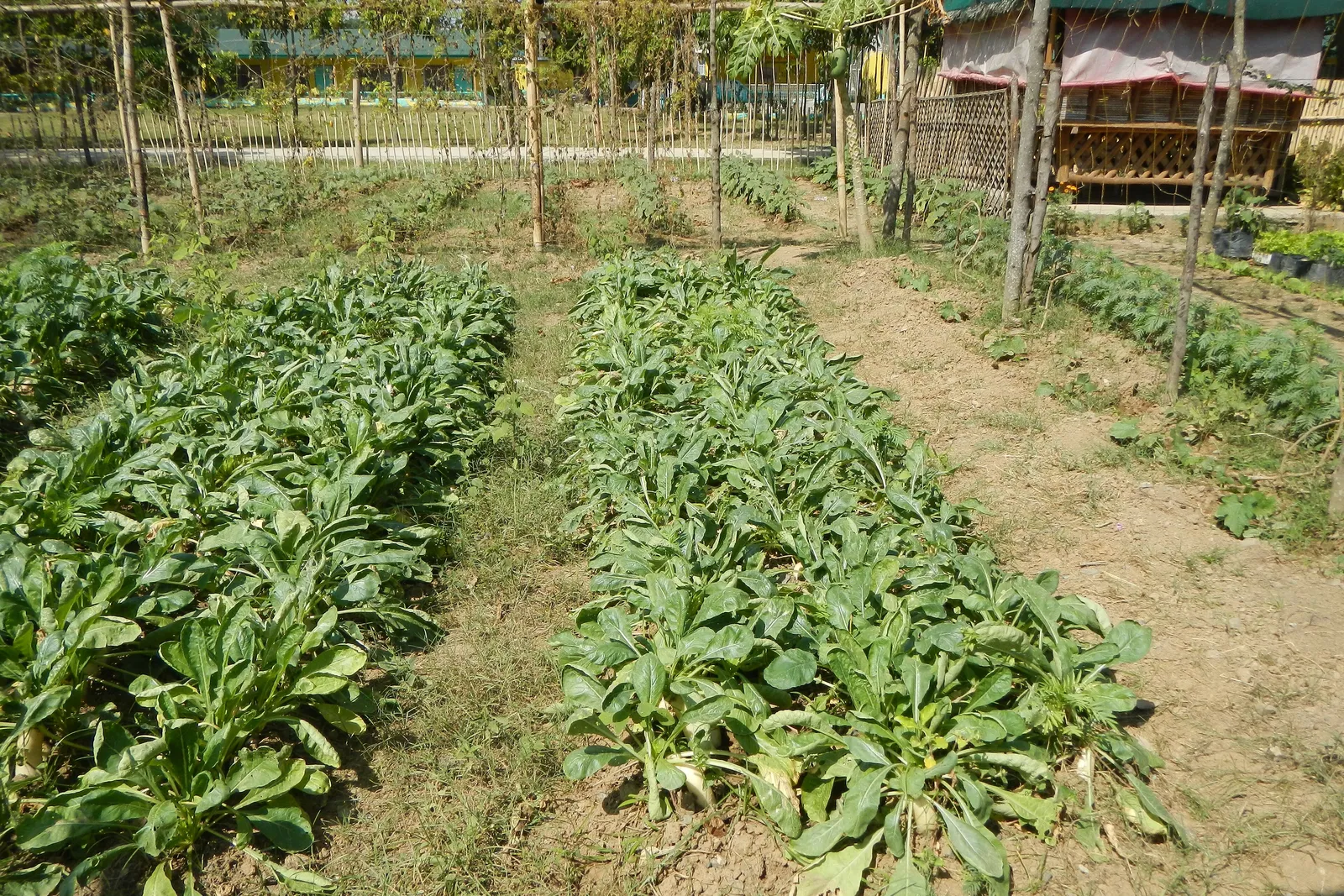
Leafy greens are the quickest lesson. Fruiting vegetables take longer to start, but a healthy row keeps giving for weeks. Many small farmers grow one of each, so cash comes in early and keeps coming. Our guide to pagtatanim ng gulay covers land preparation and care, and fertilizer for vegetables covers feeding.
A whole plot of pechay ready on one day floods your buyer and wilts by evening. Sow a small batch every week or two instead. Then you always have something fresh to sell, and a bad week costs you only one batch. Our staggered planting schedule guide shows how.
Can you farm on very little land?
Yes, even in containers. In urban and home gardens, you can grow pechay in 1.5 liter plastic bottles as pots, with two seedlings in each. A soil mix of garden soil, compost and rice hull works for trays and pots.
Raising seedlings is another idea for a small space. The seedling tray method uses a mix of garden soil, organic fertilizer and carbonized rice hull. Neighbors who grow talong, kamatis or sili need healthy seedlings each season, so ask them first if they would buy.
How much can you earn from a small farm?
No honest guide can give one number. Prices swing by season, and yields depend on your soil, water and care. But you can work out your own answer before you plant, then check it after.
Estimate the harvest
Ask growers near you how many kilos a plot like yours gives. Be modest for your first season.
Check the local price
Ask buyers what they paid in your harvest month last year. Prices change from month to month, so plan with the month you will sell in.
List every cost
Seeds, fertilizer, water, trellis, sprays, transport and labor, including your own days.
Subtract and decide
If sales barely cover costs, change the crop, the timing or the buyer before you start.
Record what really happened
Write the real harvest, price and costs. That is your true answer for next season.
Our guide to farm profitability shows how to count it properly.
Where can you get help to start a small farm?
- DA National Urban and Peri Urban Agriculture Program: under DA Administrative Order 03 of 2022, it lists seeds of mungbean and lowland vegetables, sweet potato cuttings, organic fertilizer, plastic crates and hydroponics starter kits, plus training. Ask your city or municipal agriculture office.
- RSBSA registration: free, and it opens other DA programs for seeds, fertilizer and soil analysis.
- ACPC Agri Negosyo Loan: up to PHP 300,000 for an individual small farmer at 2 percent interest, with a service fee of up to 3.5 percent. It asks for a farm plan and budget.
How does anee.io help a small farm earn more?
anee.io knows the growth stages of 85 Philippine crops, gulay included. Add your plot as a lot with its crop and planting date, and the cropping calendar dates each task. Each lot shows what to do now and what to watch for. At harvest, the harvest records keep the kilos, the buyer and the price. On Solo Farmer, up to 5 lots each keep their own day zero, which suits batch planting, and the Profit Report shows sales against every cost.
Not sure what to grow? The What to Plant Analysis has Anee weigh your climate, forecast, soil and water, then rank the crops that should do best on your land this season. It uses credits and comes with Libre + Anee and paid plans.
Let Anee rank the crops for your town, soil and water this season, then plan the plot by date.
Try What to Plant Analysis