Ischaemum rugosum: How to Spot and Control Wrinkle Grass in Rice
Ischaemum rugosum, also known as wrinkle grass, is a tall grass weed of irrigated and rainfed lowland rice fields in the Philippines. Its purplish stems and ridged spikelets set it apart from palay. This page shows how to spot it, how it hurts both your yield and your grain quality, and how to control it.
What Is Ischaemum rugosum?
Ischaemum rugosum belongs to the grass family. In English it goes by wrinkle grass, a name that fits the small ridges on its spikelets. Filipino farmers know it by many local names, such as ipot doron, bika bika, bulo bulo, gulong lapas, limba limba, salsaladay, tinitrigo and trigo trigohan. It grows in both irrigated and rainfed lowland rice fields.
This weed is an annual, and it spreads only by seed. Each plant makes thousands of seeds in one season. Seeds that drop in the field sprout with the next crop. Seeds caught at harvest end up mixed with your palay. So every plant you miss causes trouble twice, once in the soil and once in the sack.
| Name | Ischaemum rugosum |
|---|---|
| English name | Wrinkle grass |
| Family | Poaceae (Graminae) |
| Weed group | Grasses (see the three groups) |
| Local names | Ipot doron, bika bika, bulo bulo, gulong lapas, limba limba, salsaladay, tinitrigo, trigo trigohan |
| Life cycle | Annual |
| Spreads by | Seeds |
| Where it grows | Irrigated and rainfed lowland rice fields |
How to Identify Ischaemum rugosum
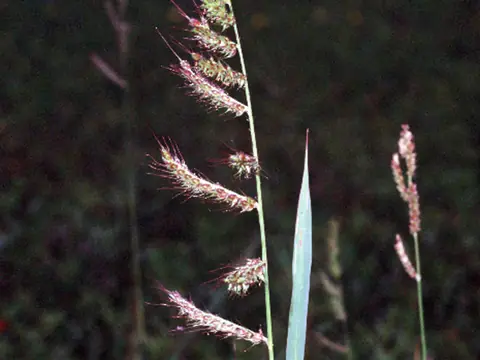
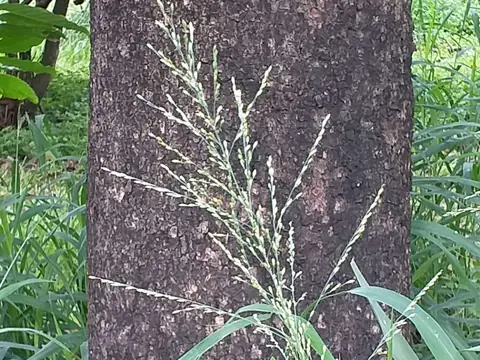
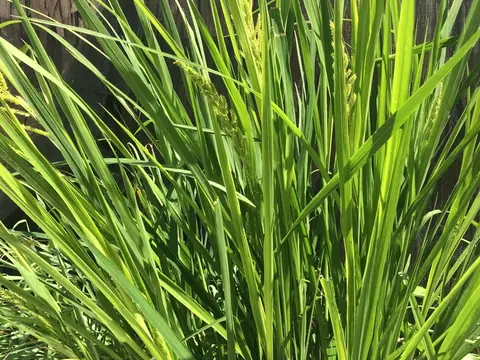
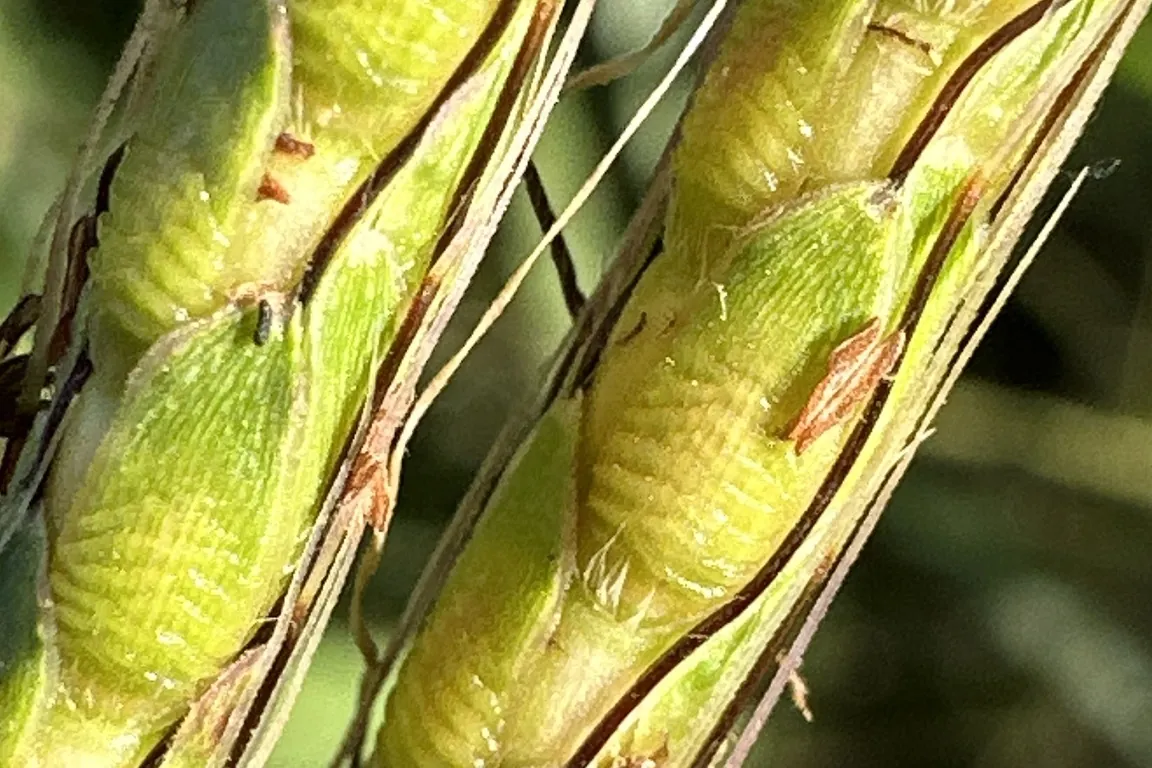
Like other grasses, it has round, hollow stems with clear joints, or nodes. The plant stands upright and can reach 100 cm. The stems have a purplish tint, and long hairs grow at each node. The leaves are flat and fairly wide. While young, the seed head looks like one single spike. As it matures, it splits into two spikes that sit side by side. Look closely at a spikelet, and you will see clear cross ridges on its lower glume.
- Upright plants grow up to 100 cm tall, with purplish stems.
- Long hairs grow at the nodes along each purplish stem.
- Leaves are flat and wide, and they spread out from the stems.
- The young seed head looks single, then splits into two spikes as it ripens.
- Each spikelet shows clear cross ridges, like wrinkles, on its lower glume.
Why It Hurts Your Palay
Ischaemum rugosum is a C4 plant, so it thrives in strong sun and heat. One plant makes an average of 4,000 seeds. If you leave it uncontrolled, it can cut rice yield by as much as 60 percent. While it grows, it takes water, light and fertilizer that your rice needs to fill its grains.
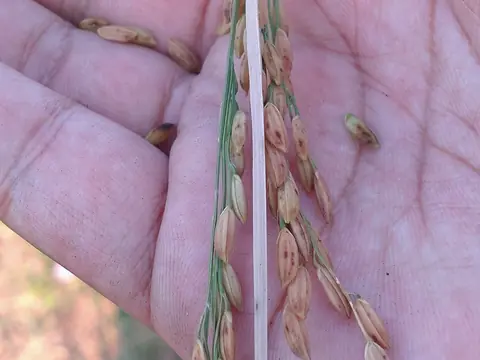
It also hurts the quality of your harvest. At harvest, the reaper or the combine can pick up its seeds along with the palay. Once mixed in, they lower the quality of your rice grains. So the damage does not stop in the field. It follows your harvest all the way to the sack you sell.
How to Control Ischaemum rugosum
- Pull it before the seed head splits and ripens, so its seeds never reach your harvest or your soil.
- Walk the field once more just before harvest. Remove any plants you missed, so their seeds do not mix with your palay.
- Use clean seed and clean your harvester or thresher between fields, since its seeds can travel with harvested grain.
What to Do at Each Age of Your Rice
- 0 to 5 days: keep the soil saturated. Use a pre emergence herbicide only if the field had many weeds last season.
- 6 to 10 days: hand weed in transplanted rice. In direct seeded rice, this is the window for an early post emergence spray.
- 11 to 20 days: keep water in the field, weed by hand or with a rotary weeder, and let Azolla and the Altica beetle help. Spray only if those fail.
- 21 to 30 days: top up the water and keep weeding. Spray only if weeding fails.
- 31 to 40 days (transplanted rice): hand weed. A spray this late is only a rescue.
- After any post emergence spray, bring the water back within 1 to 3 days at 3 to 5 cm and hold it for 4 to 5 days. Keep young rice above it.
Active Ingredients That Work on Grasses
If water and weeding cannot hold Ischaemum rugosum down, choose an active ingredient that works on grasses at the age of your rice. Each active ingredient in it is in a herbicide registered in the Philippines for rice. Shop by the ingredient on the label, never by the brand. If your field also has other kinds of weeds, the weed control helper in anee.io finds the ingredients that cover all of them.
| Rice age (days after planting) | Transplanted rice (lipat tanim) | Direct seeded rice (sabog tanim) |
|---|---|---|
| 0 to 5 days | Butachlor, Pretilachlor, Oxadiazon, Butachlor plus 2,4 D IBE, Pendimethalin, Pyrazosulfuron ethyl plus pretilachlor, Clomazone, Penoxsulam plus butachlor, Tefuryltrione plus triafamone, Tetflupyrolimet, Thiobencarb plus 2,4 D IBE | Butachlor, Pretilachlor, Oxadiazon, Pretilachlor plus butachlor, Butachlor plus 2,4 D IBE, Pendimethalin, Pyrazosulfuron ethyl plus pretilachlor, Butachlor with safener, Clomazone, Tetflupyrolimet |
| 6 to 10 days | Butachlor plus propanil, Cyhalofop butyl plus bispyribac sodium, Bispyribac sodium, Penoxsulam plus cyhalofop butyl, Pendimethalin, Cyhalofop butyl plus propanil, Propyrisulfuron, Clomazone plus propanil, Thiobencarb plus propanil, Flucetosulfuron, Cyhalofop butyl plus florpyrauxifen benzyl | Butachlor plus propanil, Cyhalofop butyl plus bispyribac sodium, Bispyribac sodium, Cyhalofop butyl, Metamifop, Pyribenzoxim plus cyhalofop butyl, Penoxsulam plus cyhalofop butyl, Cyhalofop butyl plus propanil, Pyrazosulfuron ethyl plus pretilachlor, Pendimethalin, Propyrisulfuron, Clomazone plus propanil, Thiobencarb plus propanil, Pretilachlor plus pyribenzoxim, Penoxsulam, Flucetosulfuron, Cyhalofop butyl plus florpyrauxifen benzyl |
| 11 to 20 days | Cyhalofop butyl plus bispyribac sodium, Bispyribac sodium, Pyribenzoxim plus cyhalofop butyl, Penoxsulam plus cyhalofop butyl, Metamifop plus bispyribac sodium, Cyhalofop butyl plus ethoxysulfuron, Propyrisulfuron, Fenoxaprop P ethyl plus ethoxysulfuron, Flucetosulfuron, Florpyrauxifen benzyl, Cyhalofop butyl plus florpyrauxifen benzyl, Profoxydim | Cyhalofop butyl plus bispyribac sodium, Bispyribac sodium, Cyhalofop butyl, Metamifop, Pyribenzoxim plus cyhalofop butyl, Penoxsulam plus cyhalofop butyl, Metamifop plus bispyribac sodium, Pyribenzoxim, Cyhalofop butyl plus ethoxysulfuron, Propyrisulfuron, Fenoxaprop P ethyl plus ethoxysulfuron, Flucetosulfuron, Florpyrauxifen benzyl, Cyhalofop butyl plus florpyrauxifen benzyl, Profoxydim |
| 21 to 30 days | Metamifop plus bispyribac sodium, Fenoxaprop P ethyl plus ethoxysulfuron | Cyhalofop butyl plus bispyribac sodium, Metamifop, Pyribenzoxim plus cyhalofop butyl, Metamifop plus bispyribac sodium, Pyribenzoxim |
| 31 to 40 days | No herbicide listed at this age. Hand weed and keep the water up. | Not listed for direct seeded rice |
Spray Safely
Use only herbicides registered with the Fertilizer and Pesticide Authority, and follow the label on the pack: the rate, the timing, the water and the protective clothing. Switch herbicide groups between seasons so the weeds do not learn to survive them. Our guide to herbicides for rice explains the groups.
Keep Ischaemum rugosum Out Next Season
- Plant clean, certified seed. Weed seeds mixed into the punla are the easiest way in.
- Keep the seedbed, the canals and the bunds free of weeds, so seed does not wash or blow into the paddy.
- Prepare the land well: flood, plow, let the weed seeds sprout, then kill them when you harrow. Level the field so water covers it evenly.
- Pull escapes before the seed heads open, and clean the thresher and harvester before they enter the field.
- Keep the field clean after harvest and through the fallow, so fewer seeds build up in the soil for next season.
These steps work for every grass weed in the paddy, not only this one. The weed management guide puts them in order for a whole season.
Not Sure It Is Ischaemum rugosum?
Take a clear photo of the leaf, the stem and the flower or seed head, then ask Anee, the smart farm technician in anee.io, in Tagalog or English. Anee tells you which weed it most likely is, its group, and what to do at the age of your rice. You can also put the weeding days on your cropping calendar, so the team knows when to go in.
anee.io keeps your weeding, spraying and water on one calendar, and Anee answers when a plant looks wrong.
- Weeding days on the season calendar
- Photos and notes for every lot
- Anee, the smart farm technician, in Tagalog or English
Questions Farmers Ask About Ischaemum rugosum
What do farmers call Ischaemum rugosum in the Philippines?
How do I control wrinkle grass in my rice field?
Why does wrinkle grass matter at harvest time?
Get Ischaemum rugosum out of your field
With Libre + Anee, read the whole guide: how to tell it from your crop, and what to do and spray at every age of your crop.
The account is free, no credit card.