Ammannia baccifera: Spotting Blistering Ammannia in Rice Fields
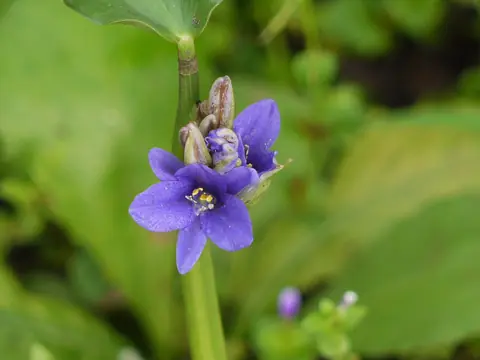
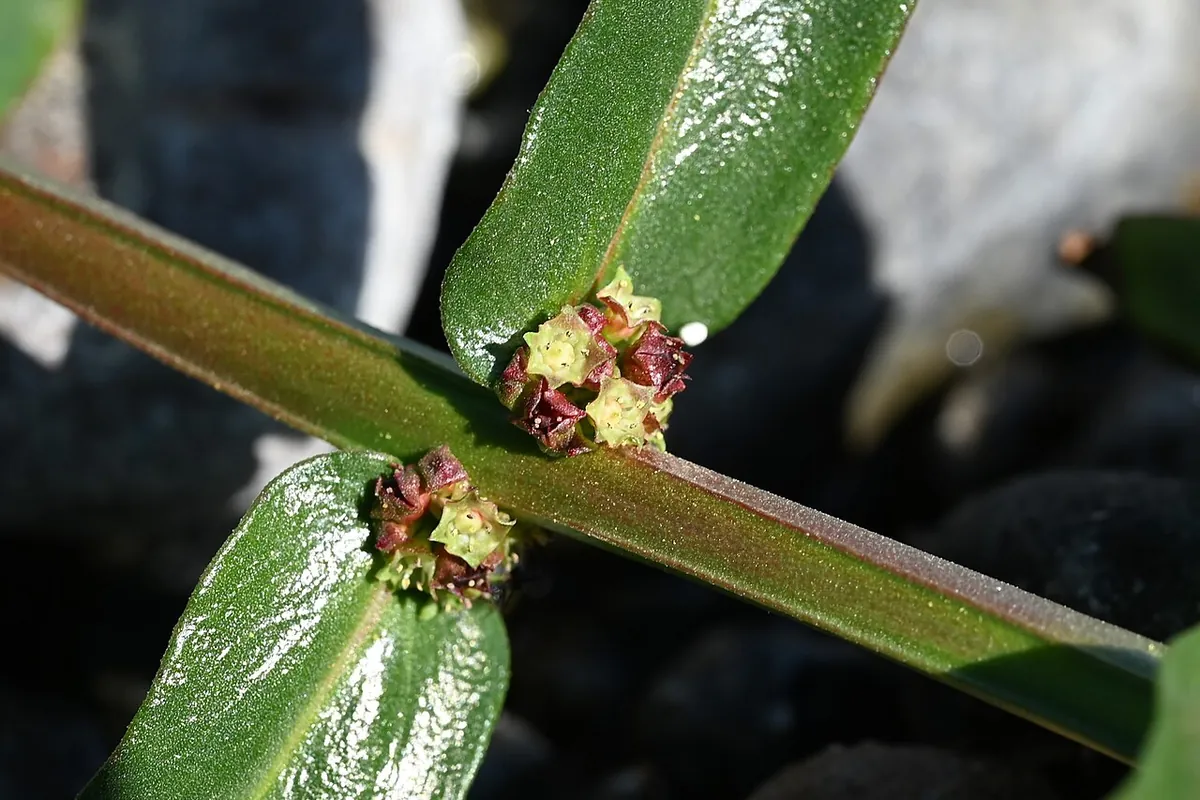
Ammannia baccifera, known in English as blistering ammannia, is a broadleaf weed of irrigated and rainfed lowland rice fields in the Philippines. It stands upright with brownish stems and tight clusters of small purplish flowers. This page shows how to spot it in your palay, what harm it can do, and how to control it for good.
What Is Ammannia baccifera?
This weed belongs to the loosestrife family, which holds many plants of wet ground. Farmers in some areas call it apoy apuyan. Ammannia baccifera grows in both irrigated and rainfed lowland rice fields, so you can meet it in almost any wet paddy. It comes up between the rice hills and grows upright with the crop.
The plant can live as an annual, finishing in one season, or carry on as a perennial. It also spreads in two ways. First, it makes seeds. Second, pieces of broken stem can take root and grow into new plants. So hand weeding that leaves stem pieces on wet soil can spread the weed instead of killing it. That is why careful weeding matters as much as early weeding.
| Name | Ammannia baccifera |
|---|---|
| English name | Blistering ammannia |
| Family | Lythraceae |
| Weed group | Broadleaves (see the three groups) |
| Local names | Apoy apuyan |
| Life cycle | Annual or perennial |
| Spreads by | Seeds and stem fragments |
| Where it grows | Irrigated and rainfed lowland rice fields |
How to Identify Ammannia baccifera
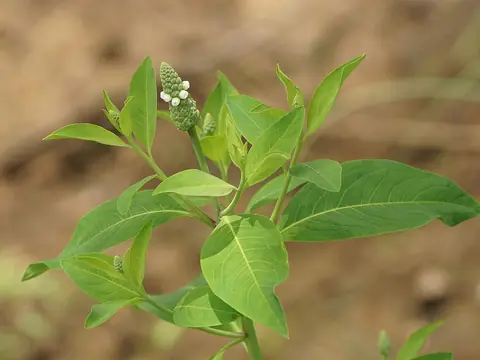
Look for an upright, branched plant with brownish stems. Its shape gives it away: the lower branches grow long, and they get shorter toward the top, so the plant looks like a small pyramid. Each leaf is somewhere between elliptical and lance shaped, with a sharp tip and a base that tapers in. As a broadleaf weed, it has flat leaves with netted veins. Finally, check where the leaves meet the stem for tight clusters of tiny purplish flowers.
- Upright, branched plants with brownish stems standing between the rice hills.
- Long branches near the base and shorter ones near the top, giving a pyramid shape.
- Elliptical to lance shaped leaves with pointed tips, narrowing toward the base.
- Tight clusters of small purplish flowers along the stem.
- Broken stem pieces on wet soil that start to root and grow again.
Why It Hurts Your Palay
This weed competes with your palay for light, water and fertilizer. Because it stands upright and branches, it can shade the lower leaves of young rice and crowd the hills it grows between. The longer it stays, the more food it takes from the crop. Thick patches also give insects, rats and other pests cover close to the rice.
It causes trouble at harvest too. Its seeds can mix with the grain, which lowers the quality of your harvest and carries the weed to new fields. Since some plants persist and broken stems can regrow, a patch you ignore this season may come back stronger in the next.
Here is good news. This weed gives way easily to herbicides, especially 2,4 D and butachlor. So if you already plan a herbicide spray for other weeds, ask your technician whether a product with one of these fits your field and the age of your rice. Then read the FPA registered label and follow its timing and rate. Spray while the weed is still young for the best result.
How to Control Ammannia baccifera
- When you hand weed, lift out the whole plant with its roots. Then carry it off the field, because stem pieces left on wet soil can root again.
- Do not chop the plant and leave the pieces in the paddy. Cutting only breaks it into fragments that may grow into new plants.
- Check the field after each weeding for new shoots coming up from broken stems, and pull them while they are small.
- Remove plants before the purplish flower clusters set seed, so fewer seeds build up in the soil.
What to Do at Each Age of Your Rice
- 0 to 5 days: keep the soil saturated. Use a pre emergence herbicide only if the field had many weeds last season.
- 6 to 10 days: hand weed in transplanted rice. In direct seeded rice, this is the window for an early post emergence spray.
- 11 to 20 days: keep water in the field, weed by hand or with a rotary weeder, and let Azolla and the Altica beetle help. Spray only if those fail.
- 21 to 30 days: top up the water and keep weeding. Spray only if weeding fails.
- 31 to 40 days (transplanted rice): hand weed. A spray this late is only a rescue.
- After any post emergence spray, bring the water back within 1 to 3 days at 3 to 5 cm and hold it for 4 to 5 days. Keep young rice above it.
Active Ingredients That Work on Broadleaves
If water and weeding cannot hold Ammannia baccifera down, choose an active ingredient that works on broadleaves at the age of your rice. Each active ingredient in it is in a herbicide registered in the Philippines for rice. Shop by the ingredient on the label, never by the brand. If your field also has other kinds of weeds, the weed control helper in anee.io finds the ingredients that cover all of them.
| Rice age (days after planting) | Transplanted rice (lipat tanim) | Direct seeded rice (sabog tanim) |
|---|---|---|
| 0 to 5 days | Pretilachlor, Oxadiazon, Butachlor plus 2,4 D IBE, Pyrazosulfuron ethyl plus pretilachlor, Imazosulfuron, Penoxsulam plus butachlor, Tefuryltrione plus triafamone, Thiobencarb plus 2,4 D IBE | Pretilachlor, Oxadiazon, Pretilachlor plus butachlor, Butachlor plus 2,4 D IBE, Pendimethalin, Pyrazosulfuron ethyl plus pretilachlor, Butachlor with safener |
| 6 to 10 days | Butachlor plus propanil, Cyhalofop butyl plus bispyribac sodium, Bispyribac sodium, Penoxsulam plus cyhalofop butyl, Pendimethalin, Cyhalofop butyl plus propanil, Imazosulfuron, Propyrisulfuron, Clomazone plus propanil, Thiobencarb plus propanil, Flucetosulfuron, Cyhalofop butyl plus florpyrauxifen benzyl | Butachlor plus propanil, Cyhalofop butyl plus bispyribac sodium, Bispyribac sodium, Pyribenzoxim plus cyhalofop butyl, Penoxsulam plus cyhalofop butyl, Cyhalofop butyl plus propanil, Pyrazosulfuron ethyl plus pretilachlor, Pendimethalin, Propyrisulfuron, Clomazone plus propanil, Thiobencarb plus propanil, Pretilachlor plus pyribenzoxim, Penoxsulam, Flucetosulfuron, Cyhalofop butyl plus florpyrauxifen benzyl |
| 11 to 20 days | Cyhalofop butyl plus bispyribac sodium, Bispyribac sodium, Pyribenzoxim plus cyhalofop butyl, Penoxsulam plus cyhalofop butyl, Metamifop plus bispyribac sodium, Bentazone, Cyhalofop butyl plus ethoxysulfuron, Propyrisulfuron, Fenoxaprop P ethyl plus ethoxysulfuron, Flucetosulfuron, Carfentrazone ethyl, Florpyrauxifen benzyl, Cyhalofop butyl plus florpyrauxifen benzyl | Cyhalofop butyl plus bispyribac sodium, Bispyribac sodium, Pyribenzoxim plus cyhalofop butyl, Penoxsulam plus cyhalofop butyl, Metamifop plus bispyribac sodium, Bentazone, Pyribenzoxim, Cyhalofop butyl plus ethoxysulfuron, Propyrisulfuron, Fenoxaprop P ethyl plus ethoxysulfuron, Flucetosulfuron, Carfentrazone ethyl, Florpyrauxifen benzyl, Cyhalofop butyl plus florpyrauxifen benzyl |
| 21 to 30 days | 2,4 D amine, 2,4 D IBE, MCPA, Metamifop plus bispyribac sodium, Bentazone, Metsulfuron methyl plus chlorimuron ethyl, Fenoxaprop P ethyl plus ethoxysulfuron, Carfentrazone ethyl | 2,4 D amine, 2,4 D IBE, Cyhalofop butyl plus bispyribac sodium, Pyribenzoxim plus cyhalofop butyl, MCPA, Metamifop plus bispyribac sodium, Bentazone, Metsulfuron methyl plus chlorimuron ethyl, Pyribenzoxim, Carfentrazone ethyl |
| 31 to 40 days | Metsulfuron methyl plus chlorimuron ethyl | Not listed for direct seeded rice |
This weed is sensitive to herbicide application, particularly to 2,4 D and butachlor.
Spray Safely
Use only herbicides registered with the Fertilizer and Pesticide Authority, and follow the label on the pack: the rate, the timing, the water and the protective clothing. Switch herbicide groups between seasons so the weeds do not learn to survive them. Our guide to herbicides for rice explains the groups.
Keep Ammannia baccifera Out Next Season
- Plant clean, certified seed. Weed seeds mixed into the punla are the easiest way in.
- Keep the seedbed, the canals and the bunds free of weeds, so seed does not wash or blow into the paddy.
- Plow and harrow well, and rake out the runners, roots or pieces you turn up. A small piece left in wet soil can grow a new plant.
- Pull escapes before they flower and set seed, and carry them out of the paddy instead of leaving them on the bund.
- Keep the field clean after harvest and through the fallow, so fewer seeds build up in the soil for next season.
These steps work for every broadleaf weed in the paddy, not only this one. The weed management guide puts them in order for a whole season.
Not Sure It Is Ammannia baccifera?
Take a clear photo of the leaf, the stem and the flower or seed head, then ask Anee, the smart farm technician in anee.io, in Tagalog or English. Anee tells you which weed it most likely is, its group, and what to do at the age of your rice. You can also put the weeding days on your cropping calendar, so the team knows when to go in.
anee.io keeps your weeding, spraying and water on one calendar, and Anee answers when a plant looks wrong.
- Weeding days on the season calendar
- Photos and notes for every lot
- Anee, the smart farm technician, in Tagalog or English
Questions Farmers Ask About Ammannia baccifera
What is Ammannia baccifera called in the Philippines?
How do I control it in my rice field?
Why does it come back after I weed it?
Get Ammannia baccifera out of your field
With Libre + Anee, read the whole guide: how to tell it from your crop, and what to do and spray at every age of your crop.
The account is free, no credit card.