Agricultural Engineer in the Philippines: Course, Board Exam, Jobs and Pay
An agricultural engineer designs the irrigation, machines, buildings and processing systems that farms run on. In the Philippines the profession is now called agricultural and biosystems engineering, and it has its own law, board exam and license. This guide covers the course, the exam, the jobs and the pay. It also covers the technician roles that work beside the engineers.
What an agricultural engineer does
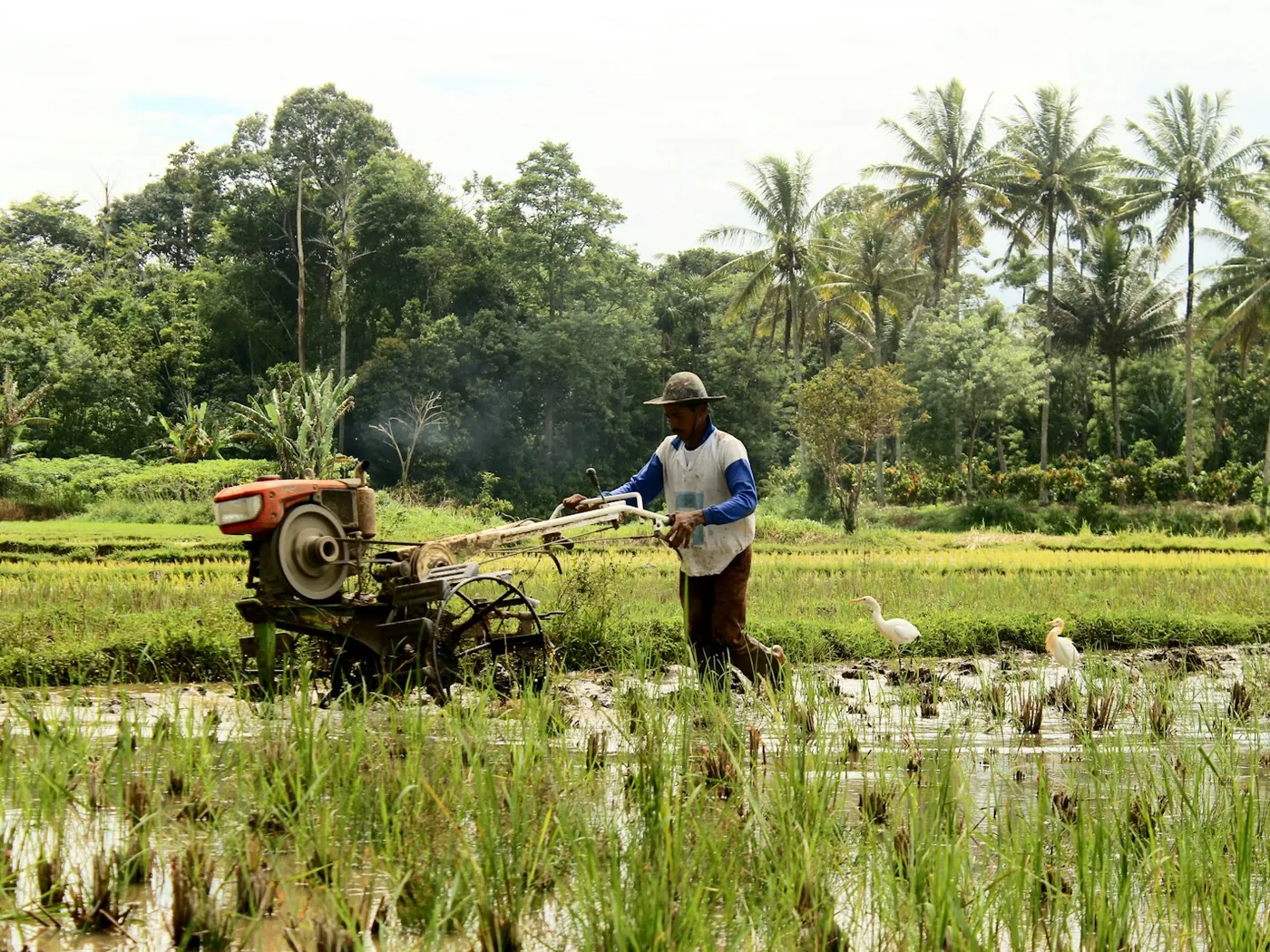
Republic Act 10915 lists the work in detail. An agricultural and biosystems engineer designs, builds and supervises irrigation and drainage, soil and water conservation, farm power and machinery, and farm buildings. The same scope covers post harvest and processing facilities, renewable energy and farm electrification, and farm waste management. It even includes weather systems for farms, automation and farm information systems.
In plain terms, if water, a machine, a dryer or a warehouse is involved, an engineer is likely part of the job. For example, a small farm reservoir, a combine harvester and a rice mill layout all fall under the profession.
The agricultural engineer course
The agricultural engineer course today is the Bachelor of Science in Agricultural and Biosystems Engineering, or BSABE. It grew out of the older BS Agricultural Engineering, and RA 10915 also lets BSAE graduates take the board exam under the terms it sets. The Commission on Higher Education sets the curriculum with the Board of Agricultural and Biosystems Engineering. State universities offer the program, and UP Los Baños runs it through its Institute of Agricultural and Biosystems Engineering.
Expect a heavy load of math and engineering, plus farm science. The board exam subjects give a good picture of what you will study:
- Agricultural and biosystems power, energy and machinery, including machine design and farm mechanization
- Land and water resources engineering, including irrigation, drainage, soil and water conservation and aquaculture engineering
- Agricultural and biosystems structures and environment, including farm buildings and forest engineering
- Agricultural and bioprocess engineering, including cold storage, farm electricity and food processing
- Project management, feasibility studies, research and extension
- Farm, fishery, ecological and environmental sciences, math, basic engineering, laws and ethics
The board exam under RA 10915
RA 10915, the Philippine Agricultural and Biosystems Engineering Act of 2016, became law on July 21, 2016 and replaced RA 8559. It requires every agricultural and biosystems engineer to pass a licensure exam given through the Professional Regulation Commission. Only licensed engineers may hold posts with engineering duties in government and in private firms.
Finish the degree
Graduate with a BS in Agricultural and Biosystems Engineering, or a BS in Agricultural Engineering, from a school recognized by CHED.
Check that you qualify
You must be of good moral character. You must also be a Filipino citizen, or a citizen of a country that lets Filipinos practice there.
Take the PRC board exam
Apply through the PRC for the licensure exam for agricultural and biosystems engineers. Check the PRC schedule for the current exam dates.
Pass with the required grades
You need a weighted general average of 70 percent, with no subject below 55 percent. If your average passes but a subject falls below 55, you retake only that subject.
Register and keep learning
Once registered, you join the accredited professional organization and complete continuing professional development to keep your license.
Agricultural engineer hiring: who needs you
The law itself creates demand. Section 34 of RA 10915 covers agencies, local governments and state universities that run irrigation, mechanization, post harvest or farm to market road programs. It tells them to employ the engineers they need. It also requires at least one licensed engineer in many facilities and firms. As a result, agricultural engineer hiring reaches well beyond the Department of Agriculture.
| Employer | Typical work |
|---|---|
| DAR, DENR | Mechanization, irrigation and farm infrastructure programs |
| Local government units | Engineer posts in agriculture offices, farm projects, inspections |
| Communal and national irrigation systems | Design, operation and maintenance of irrigation |
| Machinery makers, dealers and fabricators | At least one licensed engineer for installation, sales and service |
| Rice mills, feed mills, sugar mills, food plants | Processing lines, dryers, storage |
| Banks lending to agribusiness | Checking irrigation, post harvest and processing projects |
| Contractors, consultancies and NGOs | Irrigation, farm to market roads, farm structures |
| Universities and research agencies | Teaching, research and extension |
Demand also follows the wider farm sector, which still employs about one in five working Filipinos. Our page on agriculture in the Philippine economy has the latest numbers.
Agricultural engineer pay
Pay depends a lot on the employer, the region and your experience, and public data is thin. PayScale's 2026 page for agricultural engineers in the Philippines shows an average base salary of PHP 457,800 a year, or about PHP 38,150 a month. Its middle range runs from about PHP 250,000 to PHP 1,000,000 a year. But this is a small sample, just 11 salary profiles last updated in December 2024, so read it as a rough guide and not as what you will earn.
In government, pay follows the salary grade of each position under the Salary Standardization Law. Executive Order 64 of 2024 set the current salary schedule for civilian government workers. Since the grade differs from one engineer post to another, check the salary grade printed on each job posting before you apply.
Agricultural technician and agricultural equipment technician roles
Not every farm job needs a license. An agricultural technician works in the field: scouting pests, checking crop stages, calibrating sprayers, collecting samples and keeping records. Many start with an agriculture degree or a short course, and they often work under an agriculturist or an engineer.
An agricultural equipment technician keeps the machines running. That means tractors, hand tractors, harvesters, dryers, pumps and threshers. RA 10915 asks TESDA to set competency standards and training for agricultural and biosystems engineering technicians and operators. So this path usually runs through TESDA training rather than a board exam. Also, since every machinery firm must have a licensed engineer, technicians and engineers often work side by side in the same shop.
How anee.io's smart farm technician supports field teams
Field teams get the same kinds of questions again and again. That is where Anee, the smart farm technician, can help, from the Libre plus Anee plan up. Anee answers in Tagalog or English and reads the farm's cropping schedule, each lot's growth stage and the weather first. She can look at a photo of a pest or a sick plant.
For the team itself, anee.io keeps the plan and the people in one place. The cropping calendar dates every task from each lot's own day zero. The workers and payroll module assigns hands to activities. It comes with the Solo Farmer plan, and the Farm Owner plan adds worker logins with access levels. Meanwhile, farm maps let you draw and measure fields over satellite imagery.
Students and new graduates can plan a sample season on a real field, log each activity and write a season report. A clean record of a real crop is useful proof of field experience when you apply.
Anee answers in Tagalog or English, checks the crop stage and weather first, and can read a photo from the field.
See the smart farm technician