Soil Erosion: What It Is and How to Keep Your Topsoil on the Farm
Soil erosion is the loss of topsoil from your field, carried off by rain, running water or wind. On sloping land, a few heavy rains on bare ground can strip soil that took centuries to form. The nutrients go with it. Here is how to tell if your field is losing soil, and which practices keep it in place.
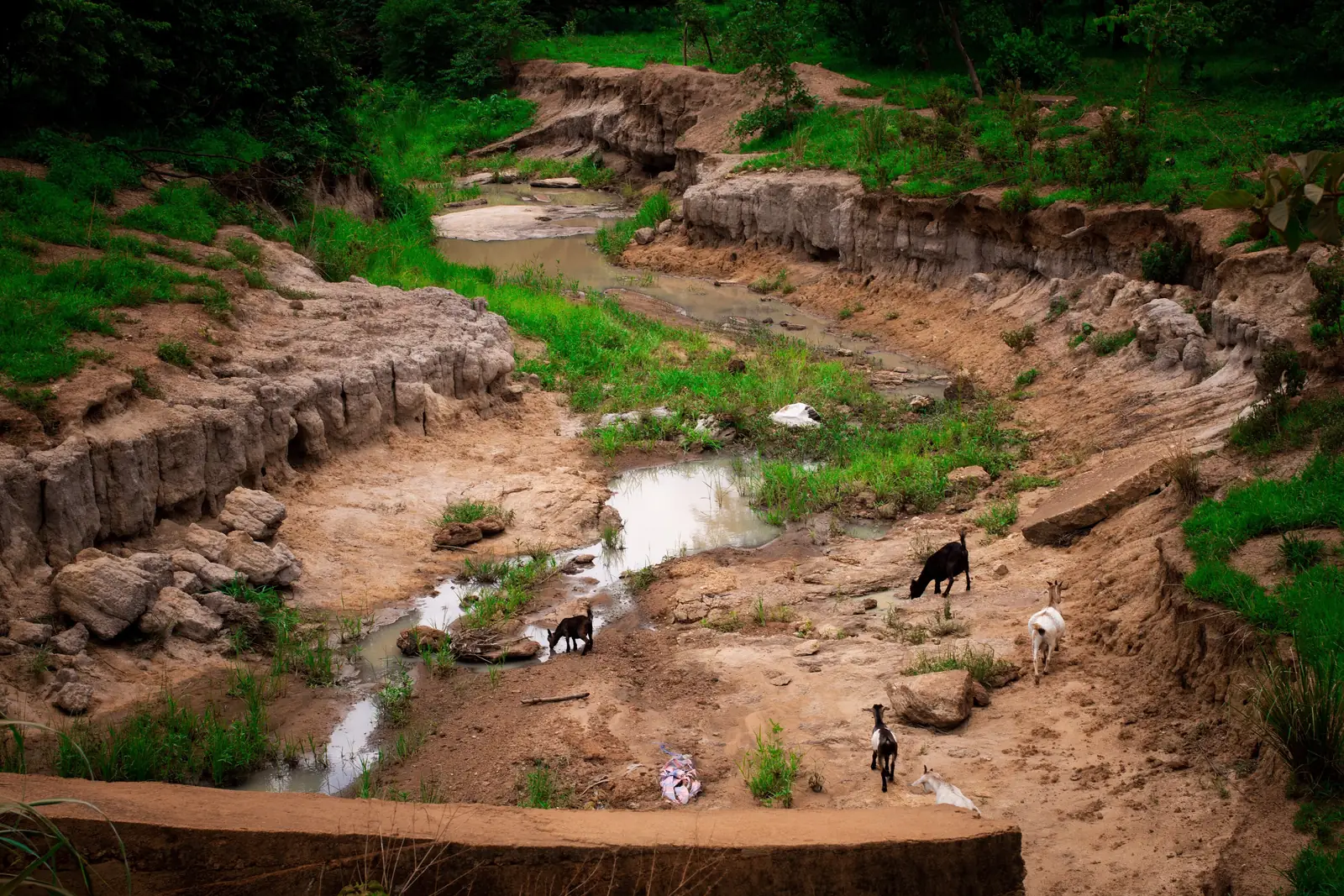
Most Filipino farms that lose soil sit on hills: upland corn, mountain vegetables and young fruit trees on cleared land. But flat fields lose ground too, along creeks and rivers that cut into their banks every rainy season.
Luckily, the fixes are old and cheap. The Ifugao built their terraces by hand. The idea behind them, slowing the water so the soil stays, works on any slope you farm.
What is soil erosion?
Soil erosion is the wearing away of the soil surface, which water, wind or farm work then carries somewhere else. That is the plain soil erosion meaning a farmer needs. In the Philippines, water does most of the damage, because our rains come hard and fast in the typhoon months.
When people ask what topsoil erosion is, they mean the loss of the top layer. That is the dark soil, often only a hand span or two deep, where most roots feed. That layer holds most of the organic matter and nutrients. So erosion takes the best part of the soil first.
How water moves soil
- Splash: raindrops hit bare ground and knock soil grains loose.
- Sheet erosion: a thin layer washes off evenly, so you hardly notice until roots and stones show.
- Rills: small channels form where runoff gathers. A plow can still erase them.
- Gullies: rills grown too deep to plow across. Each rainy season they cut further uphill.
- Bank erosion: a river in flood undercuts its bank, and whole strips of a field fall in.
Eroded soil: how to spot it in your field
The eroded soil definition is simple: soil that has lost part or all of its topsoil. The paler, harder subsoil then sits close to the surface or already shows. Eroding soil, the kind losing ground right now, leaves clues you can see after a heavy rain.
- Brown, muddy water running off the field after rain.
- Bare roots on trees and corn plants in the upper part of the slope.
- Little pillars of soil topped by pebbles, where the stone shielded the soil from raindrops.
- Pale patches on hilltops and the shoulders of the slope, where the subsoil now shows.
- Fresh silt piled at the foot of the slope, in canals or on the road.
- Crops that grow short and pale up the slope but taller at the bottom.
Why soil erosion costs you yield and fertilizer
Water does not take soil at random. It carries off the finest particles and the organic matter first. Those parts hold most of the nitrogen, phosphorus, potassium and micronutrients. So the soil that ends up in the creek is richer than the soil left in your field.
As a result, a field that keeps losing topsoil needs more fertilizer for the same harvest. It often responds less to it, too. The subsoil left behind holds less water and crusts after rain. In many upland soils it is also more acidic. If a soil test shows low pH on an eroded slope, see our guide to acidic soil preparation.
Erosion is one kind of soil degradation, the slow loss of the soil's power to grow a crop. Others include nutrient mining, loss of organic matter, compaction, acidity and salt buildup. Degraded soil usually suffers several of these at once, and erosion speeds up the rest.
How to stop soil erosion on sloping farms
Every practice below follows one rule: keep the ground covered, and slow the water down before it gathers speed. Pick the ones that fit your slope, your crop and the labor you have.
Farm along the contour
Plow, furrow and plant across the slope, never up and down it. Each furrow then catches water instead of sending it downhill.
To mark contour lines, many upland farmers use an A frame. It is three poles tied into the letter A, with a string and stone hanging from the top. When the string crosses the middle of the crossbar at your mark, both legs stand at the same level. Drive a stake at each leg, swing the frame forward, and repeat across the hill.
Plant contour hedgerows
Along each contour line, plant a double row of a fast growing legume shrub. Kakawate (Gliricidia sepium), Flemingia and Desmodium rensonii all work. Then grow your crops in the alleys between the hedgerows. Upland farmers often call this SALT style farming. Over a few years, soil caught behind each hedgerow builds up into natural terraces.
Prune the hedgerows often so they do not shade the crop, and lay the cuttings in the alleys. The leaves rot into mulch and green manure, so the hedgerow also feeds the crop. Set the rows closer on steep land and wider on gentle slopes. Expect them to take part of your planting area and to need pruning several times a year. Where you would rather not grow shrubs, a strip of vetiver grass also traps silt.
Build terraces and rock walls
On steep land, bench terraces turn the slope into flat steps. They take the most work, so they suit vegetables or rice that pay for the effort. Where stones are plentiful, stack them along the contour into low rock walls. Then plant grass behind them so the soil settles and holds.
Keep the ground covered
Bare soil washes away fastest, and the riskiest days come right after land preparation, when the first heavy rains arrive. So plow close to planting, and only as much as you can plant. Our guide to land preparation in the Philippines shows the timing of each step.
Leave rice straw, corn stalks and cane trash on the field as mulch instead of burning them. Between crops, sow mungbean or peanut as a cover crop. Under tree crops, a creeping legume like calopo (Calopogonium mucunoides) works well. Also add compost and manure, because soil rich in organic matter holds together and soaks up rain faster. These examples of organic fertilizer show what you can use.
Stop gullies and guard the riverbank
Fix a gully while it is small. Build check dams across it every few meters, low barriers of stones, logs, bamboo or sacks of soil. Silt settles behind each one, and once it fills you can plant grass there. At the top of the field, dig a diversion canal along the contour. It leads runoff from the hill above into a grassed waterway, away from your crop.
Beside rivers and creeks, keep a strip of trees, bamboo or grass instead of plowing to the edge. Bamboo and vetiver roots hold a bank well.
Before the rainy season, clean the diversion canals, repair the check dams and make sure no field lies bare. Our typhoon preparation guide covers what to do once a storm is on its way.
Track your erosion work in anee.io
Erosion control is slow work done in many small jobs, so it helps to keep it on a calendar. In anee.io, you can draw and measure each lot over satellite imagery with Farm Maps. Then add hedgerow pruning, cover crops and canal cleaning to your cropping calendar, each task dated from the lot's day zero.
The weather forecast for each lot warns you when heavy rain is coming, so you can clear the canals first. After a storm, save photos of rills and gullies in the lot's notes to compare season by season. You can also send Anee, the smart farm technician, a photo of a slope that keeps washing out. She answers in Tagalog or English.
Sign up free, map your sloping lots and put hedgerow pruning, mulching and canal cleaning on one calendar.
Start free